


How to Avoid Them
After working with wholesalers, lighting brands, interior designers, hotel procurement teams, and distributors from dozens of countries, we've noticed an interesting pattern.
Most sourcing problems are not caused by manufacturing defects. They happen much earlier.
A project usually starts with excitement—new product ideas, competitive pricing, and ambitious launch plans. But somewhere between the first quotation and the final shipment, small decisions begin to compound. A specification isn't confirmed. A sample is approved too quickly. Packaging is treated as an afterthought. The factory receives incomplete information.
Months later, these small decisions become expensive problems.
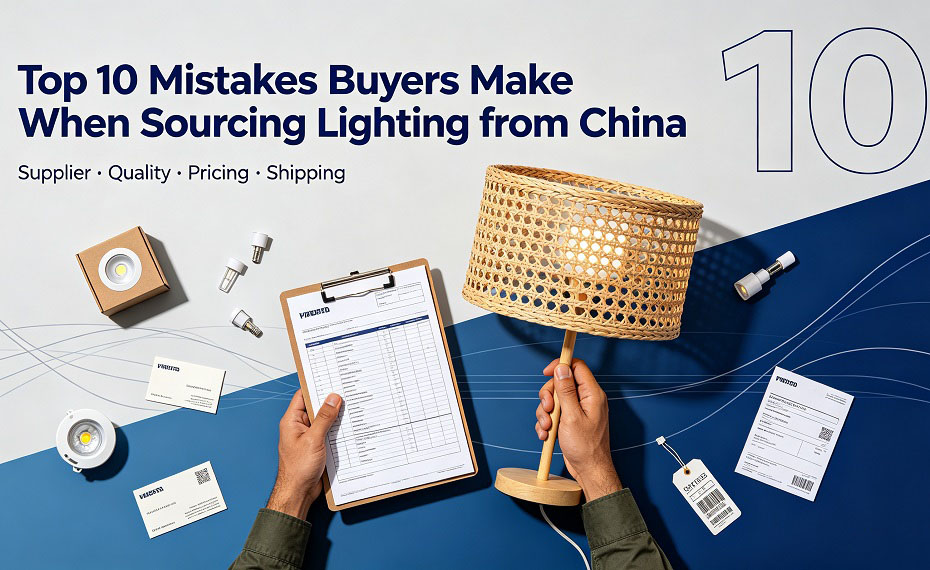
The purpose of this article isn't to criticize buyers. Every experienced importer has made at least one of these mistakes. The goal is to help you recognize them before they affect your next project.
Mistake 1: Comparing Suppliers Only by Unit Price
The quotation is often the first document buyers compare—and sometimes the only one. But a lower unit price rarely represents the lowest total cost.
Consider what isn't shown on the quotation:
· Product consistency
· Engineering support
· Packaging quality
· Communication efficiency
· Defect rate
· Lead time reliability
A supplier that is 5% more expensive may reduce warranty claims by 20%. That's a better investment.
Mistake 2: Treating Every Factory as If It Were the Same
Two factories may produce similar-looking products while operating very differently.
One specializes in handcrafted woven lighting. The other manufactures hundreds of unrelated products.
Experience matters. Factories that focus on a specific category usually solve problems faster because they've already encountered them.
Ask yourself:
Is this factory experienced with my type of product, or just capable of producing it?

Mistake 3: Approving Samples Too Quickly
Many buyers inspect a sample for only one thing: "Does it look good?"
Professional buyers ask additional questions.
· Is installation easy?
· Is the structure stable?
· Can the packaging survive international shipping?
· Is maintenance straightforward?
· Will customers assemble it correctly?
The sample is not just a product. It is the last opportunity to improve the project before production begins.
Mistake 4: Waiting Too Long to Discuss Certifications
Certification conversations often happen after sampling. They should happen before development begins.
Changing electrical components after production starts is significantly more expensive than confirming requirements during the quotation stage.
Before approving production, be sure to clarify your target market, required certifications, and electrical specifications.
Mistake 5: Ignoring Packaging Until the End
Packaging isn't just about protecting products.
It affects:
· Shipping costs
· Product damage
· Warehouse handling
· Customer experience
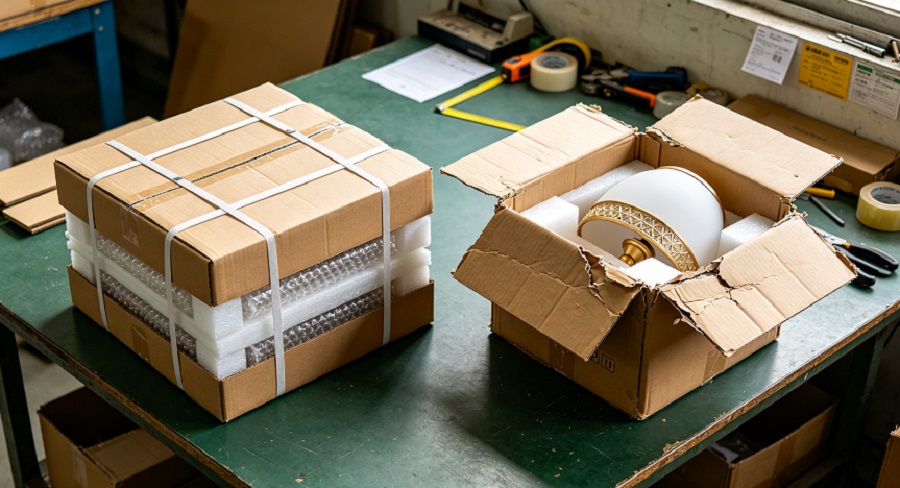
Some buyers spend weeks discussing lamp finishes and only five minutes discussing cartons.
Yet damaged packaging is often the first thing customers notice.
Mistake 6: Assuming Lead Time Means Manufacturing Time
When a factory says: "Production takes 35 days."
That usually does not include:
· Product development
· Sample revisions
· Material purchasing
· Certification preparation
· Shipping
Many launch delays happen because buyers confuse production time with project time. Always request a complete project schedule—not only manufacturing days.
Mistake 7: Changing Specifications After Production Starts
Small changes rarely stay small. Modifying cable colors, lamp sockets, surface finishes, packaging, or product dimensions often necessitates new drawings, new materials, production adjustments, and additional inspections—steps that can extend production lead times and introduce the risk of errors.
The earlier specifications are finalized, the smoother the production process will be.
Mistake 8: Forgetting That Handmade Products Are Handmade
This mistake is especially common with natural materials such as: Rattan, Bamboo, Seagrass and Wicker.
Each handmade item is unique and will exhibit subtle natural variations. Such variations are inevitable and do not necessarily indicate a defect.

Professional buyers define acceptable tolerances before production instead of expecting every handmade product to look machine-made.
Mistake 9: Thinking Logistics Starts After Production
Shipping begins much earlier than buyers realize.
Good manufacturers consider logistics during:
· Product design
· Packaging development
· Carton sizing
· Container planning
A slightly different frame design may allow significantly more products to fit into a container. This affects total landed cost long before the goods leave the factory.
Mistake 10: Treating Manufacturers as Vendors Instead of Partners
Perhaps the most expensive mistake isn't technical. It's relational.
Some buyers communicate only when requesting quotations. Others involve manufacturers throughout product development.
The second group often receives:
· Better technical advice
· Faster problem solving
· Improved production planning
· Packaging suggestions
· Cost-saving ideas
Factories build products every day. Using that experience benefits both sides.

A Better Way to Source Lighting Products
Instead of asking: "Who has the lowest price?"
Try asking:
1. Which supplier understands my market?
2. Which manufacturer communicates clearly?
3. Which factory can support future growth?
4. Which partner will still be reliable three years from now?
The answers to these questions usually determine whether a sourcing project succeeds.
How XINSANXING Works With International Buyers
At XINSANXING Lighting Factory, we view sourcing as a collaborative process rather than a simple transaction.
Our team works closely with buyers to clarify product specifications, review packaging, confirm certifications, optimize production schedules, and identify potential issues before mass production begins.
This proactive approach helps reduce delays, improve product consistency, and create stronger long-term partnerships.
Whether customers require OEM development, ODM customization, or private-label manufacturing, early communication remains one of the most effective ways to avoid costly sourcing mistakes.


Frequently Asked Questions
Focusing exclusively on price instead of evaluating the supplier's experience, communication, and quality management capabilities.
Yes. Samples allow you to evaluate quality, functionality, packaging, and potential improvements before mass production.
Lower prices may reflect differences in materials, production methods, quality control, or included services. Always compare the complete offer, not just the unit price.
Define product specifications clearly, verify certifications early, approve samples carefully, and work with experienced manufacturers that specialize in your product category.
No. Small variations are a natural characteristic of handcrafted products and should be discussed as acceptable tolerances before production.
Open communication, clear documentation, realistic expectations, and continuous collaboration between the buyer and manufacturer.
Conclusion
Successful sourcing rarely depends on a single decision. It is the result of many small choices made consistently throughout the project—from selecting the right manufacturing partner and confirming technical specifications to reviewing samples, planning packaging, and communicating effectively.
The buyers who achieve the best long-term results are not necessarily those who negotiate the lowest prices. They are the ones who approach sourcing as a partnership built on preparation, transparency, and shared expertise.
By avoiding these common mistakes, you can reduce risk, improve product quality, shorten project timelines, and build stronger relationships with manufacturers that support your business as it grows.
Recommended Content:
If You Are in Business, You May Like



Post time: Jul-18-2026