


As a professional manufacturer in the home and garden decorative lighting sector, XINSANIXNG Lighting brings 19 years of experience in product R&D and manufacturing, backed by comprehensive service support. Our extensive export experience helps you save time and effort.
12 Proven and Practical Strategies to Reduce Transportation Costs
For many importers, shipping costs seem unpredictable.
Freight rates rise and fall, fuel surcharges change, and ocean freight markets fluctuate throughout the year. While buyers cannot control global shipping prices, they can control something just as important—the amount they pay to move each product.
One of the biggest misconceptions in international sourcing is that shipping costs are determined only by freight companies. In reality, many of the most effective cost-saving opportunities begin much earlier, during product design, packaging, production planning, and supplier communication.
Over the years, we have worked with wholesalers, retailers, hospitality buyers, and private-label brands importing decorative lighting from China. The businesses that consistently reduce shipping costs rarely negotiate the cheapest freight rates—they optimize everything before the goods reach the container.

This guide explains the practical methods that experienced buyers use to lower shipping costs without compromising product quality.
First, Understand What You're Really Paying For
Lighting products are different from many consumer goods.
A rattan pendant lamp may weigh only 3 kg, but because of its size, shipping companies often charge based on volume, not weight. This means two products with identical weights can have very different freight costs.
Your landed cost is influenced by:
· Carton dimensions
· Container utilization
· Product shape
· Packaging design
· Shipping method
· Destination country
Understanding these factors makes it much easier to identify where savings are possible.
Strategy 1: Design Products for Shipping, Not Just for Display
A beautiful product that ships inefficiently can become expensive to import.
During product development, ask your manufacturer:
· Can the frame be assembled after arrival?
· Can removable parts reduce carton size?
· Can lampshades be nested?
· Can hardware be packed separately?

Knock-down lighting design reduces shipping volume and freight costs
Even a small reduction in carton dimensions can increase the number of units loaded into a container.
For wholesalers importing thousands of units each year, this difference can translate into substantial savings.
Strategy 2: Optimize Packaging Before Mass Production
Packaging protects products—but it should also maximize container efficiency.
Well-designed export packaging balances:
· Protection
· Space efficiency
· Ease of handling
· Brand presentation
Ask your supplier to compare:
· Current carton dimensions
· Alternative packing methods
· Container loading calculations
Reducing empty space inside cartons often produces greater savings than negotiating a lower freight rate.
Strategy 3: Increase Container Utilization
One of the easiest ways to reduce freight cost per unit is to improve how products are loaded.
Professional manufacturers often prepare loading plans before shipment.
Questions worth asking include:
1. Can products be mixed efficiently?
2. Can cartons be rotated?
3. Can different models share one container?
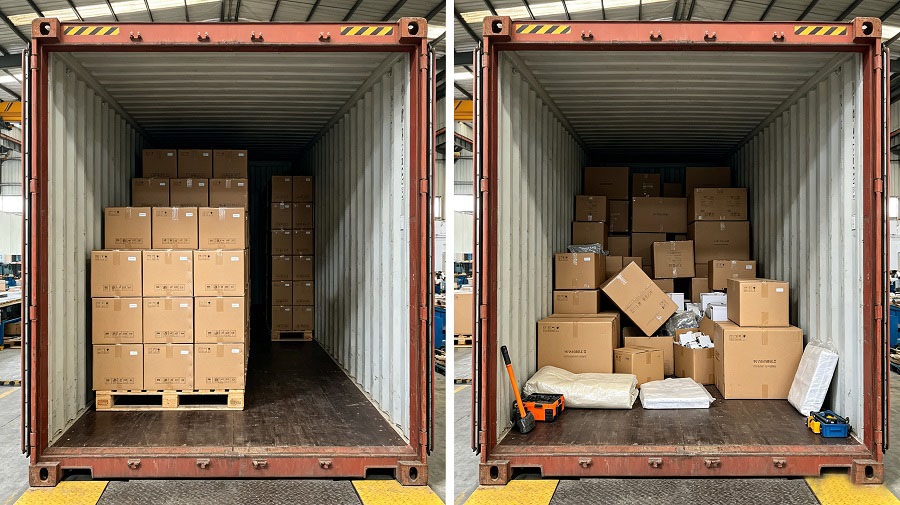
Efficient container loading for decorative lighting exports.(left)
Factories experienced in export logistics can frequently improve loading efficiency without changing the product itself. And XINSANXING Lighting can achieve this.
Strategy 4: Combine Multiple Product Lines
Importing only one product sometimes wastes valuable container space.
Many buyers reduce costs by purchasing a mix of chandeliers, table lamps, floor lamps, wall lights, and accessories; compared to shipping single products, containers loaded with a variety of items often achieve higher space utilization.
Strategy 5: Order Larger Quantities Less Frequently
Shipping small orders every month usually costs more than consolidating purchases. Larger shipments often provide:
· Lower freight cost per unit
· Better production efficiency
· Lower packaging costs
· Fewer customs procedures
Inventory planning should balance storage costs against shipping savings.
Strategy 6: Choose the Right Shipping Method
| Shipping Method | Best Use |
| Sea Freight | Large wholesale orders |
| Air Freight | Urgent replenishment |
| Express Courier | Samples and prototypes |
| Rail (where available) | Certain regional markets |
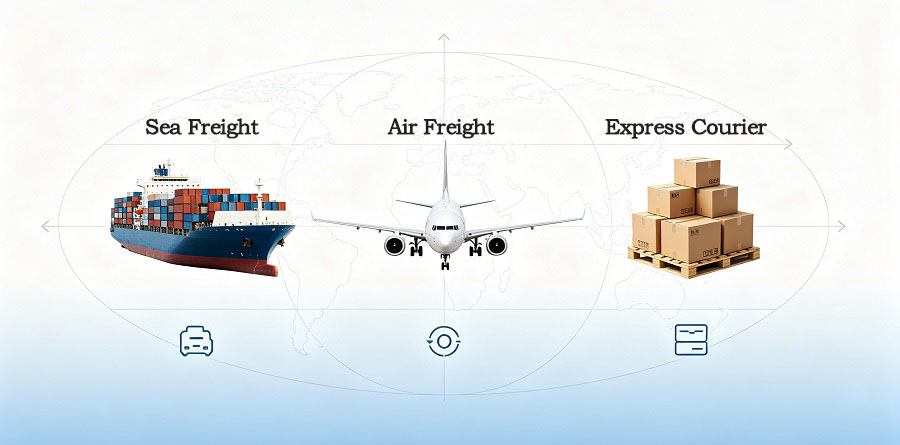
Sea container ship, cargo aircraft, and express shipping.
Each shipping option serves a different purpose. Avoid using air freight simply because production was delayed. Planning ahead is almost always less expensive.
Strategy 7: Plan Around Peak Shipping Seasons
Freight rates often increase before:
· Christmas
· Chinese New Year
· Major retail seasons
Placing production orders earlier can help avoid seasonal price increases and limited shipping capacity.
Strategy 8: Work With Manufacturers That Understand Export Packaging
Manufacturers influence shipping costs more than many buyers realize.
Experienced export factories consider:
· Carton strength
· Pallet dimensions
· Container loading
· Protective materials
· Shipping marks
This often reduces both freight costs and product damage.
Strategy 9: Reduce Product Damage During Transportation
The cheapest shipment becomes expensive if products arrive damaged.
Improving packaging may slightly increase packing costs while significantly reducing:
· Product returns
· Replacement shipments
· Customer complaints
Always evaluate shipping costs together with damage rates—not separately.
Strategy 10: Discuss Shipping During Product Development
Most buyers wait until production is complete before thinking about logistics. A better approach is to discuss shipping during the design stage.
Questions include:
· Can packaging be redesigned?
· Can components be disassembled?
· Can carton dimensions be standardized?
These changes are much easier before production begins.
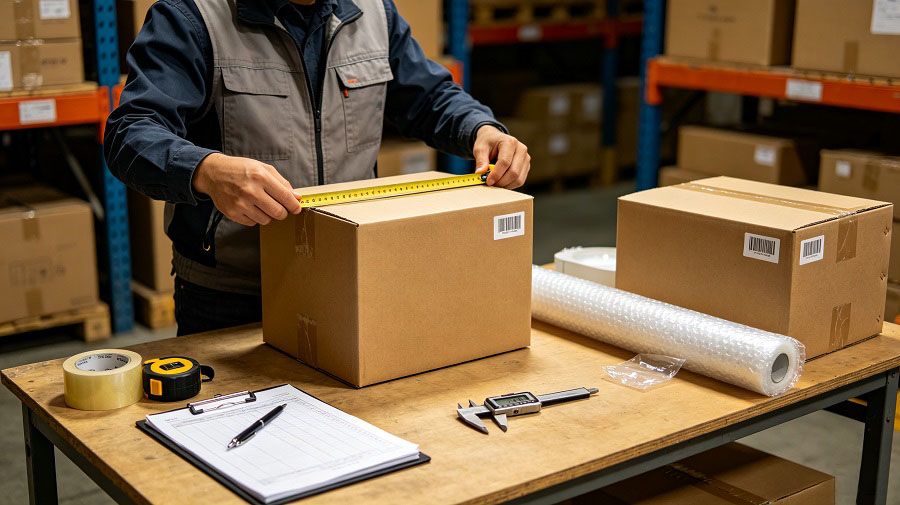
Engineers optimizing packaging dimensions to reduce freight costs
Strategy 11: Calculate Total Landed Cost—Not Just Freight
The lowest shipping quotation does not always produce the lowest total cost. Consider:
· Freight
· Packaging
· Customs duties
· Product damage
· Warehouse handling
· Delivery charges
Professional buyers evaluate total landed cost rather than focusing on one expense.
Strategy 12: Build Long-Term Relationships With Your Manufacturer
Long-term manufacturing partners often help buyers reduce shipping costs over time.
They become familiar with:
· Your preferred packaging
· Product mix
· Shipping schedules
· Market requirements
Experienced factories frequently suggest improvements that buyers may never consider on their own. This collaborative approach often delivers greater savings than negotiating freight rates alone.
How XINSANXING Helps Buyers Reduce Shipping Costs
At XINSANXING Lighting Factory, shipping efficiency is considered during product development—not after production is complete.
The team works with customers to improve:
· Product structure
· Packaging dimensions
· Carton layout
· Container utilization
· Mixed-model loading
· Export packaging
For handcrafted rattan and bamboo lighting, where product size often affects freight costs more than product weight, these optimizations can significantly improve shipping efficiency without sacrificing product quality.


Frequently Asked Questions
Many decorative lighting products are lightweight but occupy large volumes, so freight is often calculated based on dimensional weight or container space.
Not always. The goal is to balance protection and space efficiency. Well-designed packaging can lower freight costs while reducing product damage.
For large wholesale orders, sea freight generally offers the lowest cost per unit. However, the best choice depends on order size and delivery requirements.
Yes. Knock-down structures, removable components, and optimized dimensions can significantly improve container utilization.
In many cases, yes. Mixed-product containers often use available space more efficiently than single-product shipments.
The best results usually come from close collaboration between the buyer, manufacturer, and freight forwarder, with packaging and product design considered early in the process.
Conclusion
Reducing shipping costs is not about finding the cheapest freight quote—it is about improving every stage of the supply chain. From product design and packaging to container loading and production planning, small improvements made before shipment can significantly reduce total landed costs.
The most successful importers treat shipping as part of product development rather than as the final step in the sourcing process.
By working closely with an experienced manufacturer that understands both production and export logistics, buyers can reduce freight expenses, improve delivery efficiency, and build a more competitive business.
Looking for a professional rattan lighting manufacturer?
Recommended Content:
If You Are in Business, You May Like



Post time: Jul-13-2026