


As a professional manufacturer in the home and garden decorative lighting sector, XINSANIXNG Lighting brings 19 years of experience in product R&D and manufacturing, backed by comprehensive service support. Our extensive export experience helps you save time and effort.
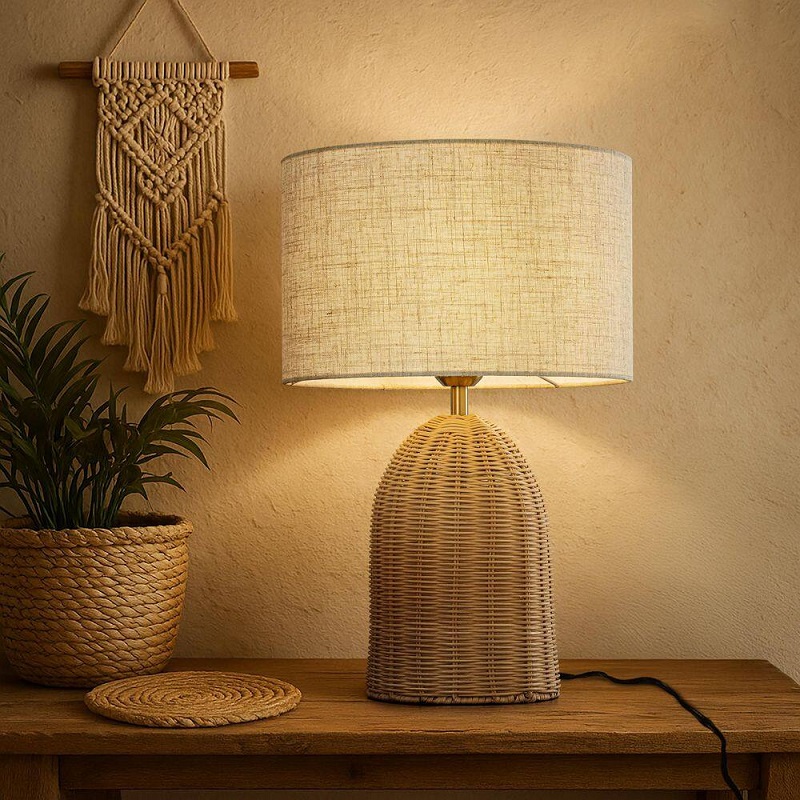
When customers see a finished rattan lamp, they usually notice the final design first. They see the shape, texture, color, and how beautifully the light changes the atmosphere of a room. But behind every handmade rattan lamp is a much longer story.
Before a lamp reaches a hotel, restaurant, retail store, or customer's home, it has already passed through many carefully controlled steps—from selecting natural materials to skilled hand weaving, structural assembly, electrical testing, and final inspection.
For buyers sourcing handmade lighting, understanding the manufacturing process is important.
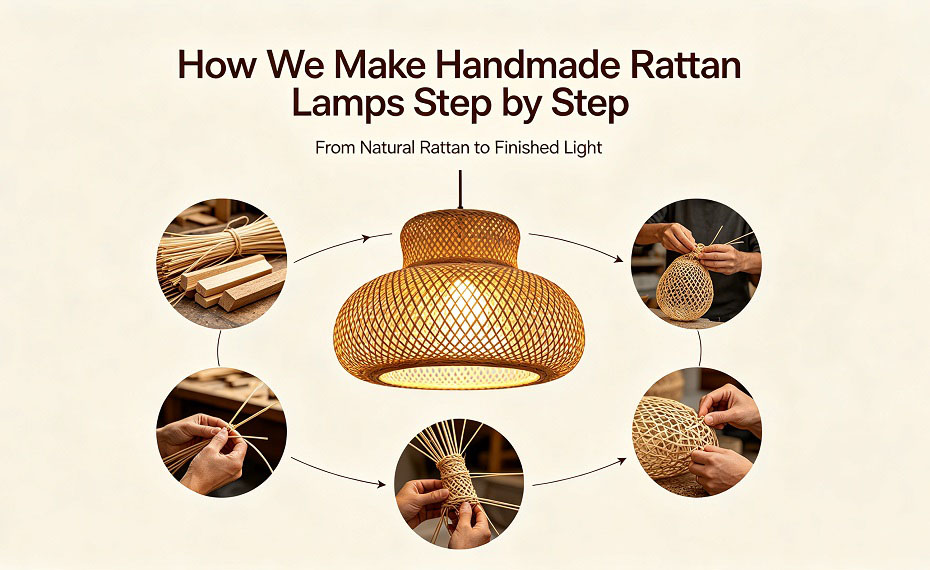
A beautiful product is not created by materials alone. It requires experienced craftspeople, production knowledge, quality standards, and attention to details at every stage.
This article takes you behind the scenes of how handmade rattan lamps are produced in a professional lighting factory.
A Handmade Rattan Lamp Starts With the Right Material
The manufacturing process begins long before weaving.
The first step is selecting suitable natural materials.

>> Workers selecting natural rattan materials for handmade lamp production <<
Rattan is a renewable material known for its flexibility, strength, and natural texture. However, not every piece of rattan is suitable for lighting production.
Workers carefully inspect materials based on:
· Thickness
· Flexibility
· Surface condition
· Color consistency
· Dryness
· Strength
Poor-quality material can affect the appearance and durability of the final product. This is why experienced manufacturers invest time in material selection before production begins.
Step 1: Preparing and Processing Rattan Materials
After material selection, the following pretreatment processes may be required for the raw rattan, depending on the design requirements:
· Cleaning
· Drying
· Cutting
· Splitting
· Surface treatment
Proper preparation improves:
· Flexibility during weaving
· Resistance to cracking
· Final appearance
· Product consistency
Natural materials require experience because excessive processing can remove their original texture and character.
The goal is not to make rattan look artificial. The goal is to preserve its natural beauty while improving performance.
Step 2: Creating the Lamp Structure
Before weaving begins, the internal structure is prepared.
Many rattan lamps include:
· Metal frames
· Support structures
· Electrical components
· Hanging systems
The frame determines the final shape of the lamp.
For custom lighting projects, this stage may involve:
· Engineering drawings
· Prototype development
· Dimension adjustments
· Structural testing

>> Workers welding or assembling metal frames for rattan pendant lamps. <<
A well-designed frame ensures the lamp remains stable while maintaining the intended appearance.
Step 3: Hand Weaving the Rattan Lampshade
This is the stage where craftsmanship becomes visible. Unlike machine-produced lighting, handmade rattan lamps depend heavily on skilled artisans.

>> At the XINSANXING lighting factory, a skilled artisan is hand-weaving a natural rattan lampshade. <<
During weaving, workers carefully control:
· Pattern alignment
· Material tension
· Shape accuracy
· Overall symmetry
Different designs require different techniques. Some lamps use simple open weaving patterns. Others require complex structures involving hundreds or thousands of individual weaving movements.
The skill level of the artisans directly determines the appearance, durability, and consistency of the products.
For this reason, experienced artisans are among the most valuable assets of a handmade lighting factory.
Step 4: Surface Finishing and Detail Adjustment
After weaving is completed, each lamp goes through finishing work.
Workers check and adjust:
· Loose fibers
· Uneven areas
· Surface details
· Connection points
· Overall shape
Depending on customer requirements, products may receive additional treatments such as:
· Natural finishes
· Protective coatings
· Color adjustments
For handmade products, this stage is where small imperfections are corrected before assembly.
Step 5: Electrical Assembly and Safety Testing
A decorative lamp is not only a design product. It is also an electrical product.
It involves the assembly of electrical components such as lamp holders, cables, switches, connectors, and electrical components requires quality checks including electrical functional testing, component inspection, and installation verification.

>> A technician testing finished lighting fixtures. <<
For international buyers, electrical specifications must comply with the requirements of the target market.
For example:
· Europe may require CE and RoHS compliance.
· The United States may require UL or ETL depending on requirements.
· Australia may require SAA compliance.
Step 6: Quality Inspection Before Shipment
Quality control is one of the most important stages of manufacturing.
A professional inspection process checks:
Inspectors check:
· Shape
· Weaving quality
· Color
· Surface condition
· Structure
They verify:
· Frame stability
· Connection strength
· Installation safety
· Function
They test:
· Electrical performance
· Lamp holder function
· Components
· Packaging
They confirm:
· Product protection
· Labels
· Carton quality

>> QC staff checking finished rattan lamps before packaging. <<
Handmade does not mean uncontrolled. Professional factories combine traditional craftsmanship with modern quality management.
Step 7: Professional Export Packaging
The final product still needs to survive international transportation.
A professional inspection process checks:
Export packaging is designed to protect against:
· Long-distance shipping
· Handling damage
· Warehouse movement
Packaging considerations include:
· Product protection
· Carton size
· Container efficiency
· Customer requirements
For private-label customers, packaging may also include:
· Brand labels
· Custom cartons
· Instruction manuals
· Product information

>> Export packaging for handmade rattan lighting products. <<
Step 8: Container Loading and Global Delivery
After final approval, products are prepared for shipment.
The factory coordinates:
· Quantity confirmation
· Loading arrangement
· Export documents
· Shipping preparation
Experienced manufacturers understand that production quality is only part of successful delivery.
The product must also arrive safely and efficiently at the buyer's destination.
How Long Does It Take to Make a Handmade Rattan Lamp?
Production time depends on:
· Product complexity
· Order quantity
· Customization requirements
· Material preparation
A typical custom project may include:
| Production Stage | Estimated Time |
| Design confirmation | Several days |
| Sample development | 1–3 weeks |
| Material preparation | 1–2 weeks |
| Mass production | 3–6 weeks |
| Inspection and packing | Several days |
Complex handmade designs may require additional development time.
Why Factory Experience Matters in Handmade Lighting Production
Handmade lighting combines craftsmanship and manufacturing discipline. A factory needs more than skilled workers.
It also needs:
· Production planning
· Quality systems
· Export experience
· Engineering support
· Customer communication
Without these systems, handmade production can become inconsistent.
The best manufacturers combine traditional craftsmanship with modern production management.
How XINSANXING Creates Handmade Rattan Lighting
At XINSANXING Lighting Factory, handmade lighting is not treated as simple decoration. It is a combination of craftsmanship, design understanding, and manufacturing experience.
The factory supports global buyers with:
· Custom rattan lighting development
· OEM and ODM projects
· Private label production
· Quality inspection
· Export services
From the first material selection to final shipment, each production stage is carefully managed to help customers receive reliable, consistent lighting products.
Frequently Asked Questions
Most decorative weaving processes are completed manually, while certain steps such as frame production and electrical assembly may use specialized equipment.
Because skilled workers individually shape and weave natural materials, each product requires more manual attention compared with automated production.
Yes, when produced by experienced manufacturers with proper quality control systems.
Yes. Manufacturers can often customize size, shape, materials, colors, packaging, and branding.
Yes. Many hotels, resorts, restaurants, and designers choose handmade lighting because it creates unique interior experiences.
Buyers should review factory photos, production videos, samples, quality processes, and export experience before placing orders.
Conclusion
Every handmade rattan lamp carries a manufacturing story.
From selecting natural materials and preparing each component to weaving, assembly, testing, and export packaging, every stage contributes to the final quality of the product.
For buyers, understanding this process helps explain why handmade lighting has a different value compared with mass-produced alternatives.
A handmade rattan lamp is not simply a lighting fixture. It represents craftsmanship, natural materials, design experience, and the expertise of the people who created it.
For brands, designers, retailers, and hospitality projects seeking distinctive lighting products, choosing the right manufacturing partner is the first step toward creating collections that customers remember.
Looking for a professional rattan lamp manufacturer?
Recommended Content:
If You Are in Business, You May Like

Post time: Jul-28-2026