


Get a free, no-obligation quotation from our team. We can produce samples within 7-15 days and ship bulk orders within 25–35 days to North America and Europe.
Importing solar wicker lanterns from China can unlock significant margins for retailers, project buyers, and brand owners—but only if you navigate the sourcing process correctly. From verifying a supplier's credibility to managing quality control before shipment, each step carries decision points that directly impact your product quality and bottom line.
This checklist walks you through every stage of the sourcing process, so you can import with confidence.
I. Define Your Product Requirements Before Reaching Out
Rushing into supplier outreach before clarifying your needs is one of the most common and costly mistakes new importers make. Before you send a single inquiry, document the following:
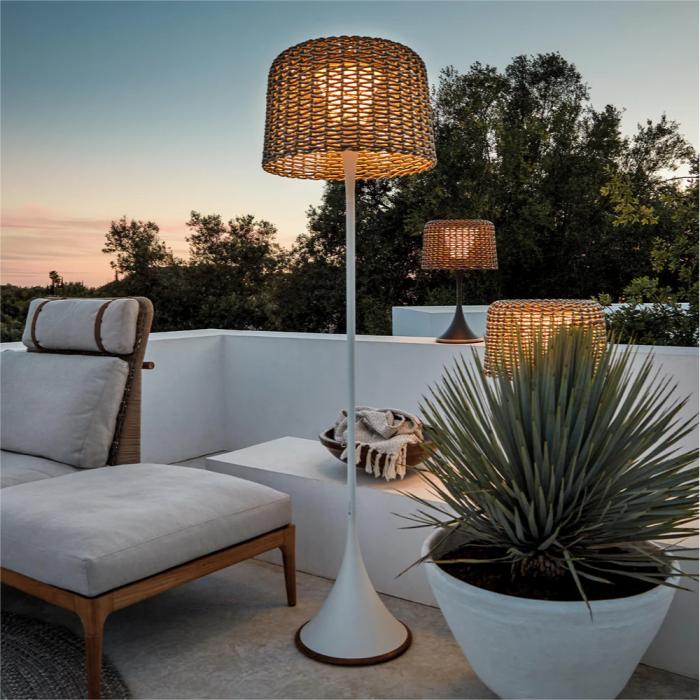
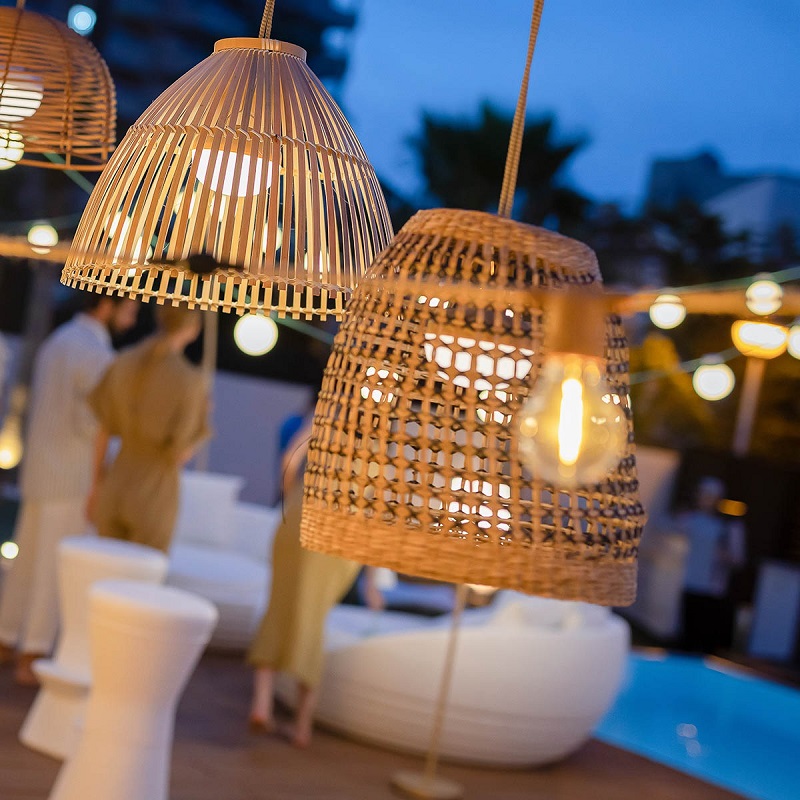
Many people assume rattan is delicate and only for indoor use, but high-quality outdoor rattan light are treated to resist weather, UV rays, and moisture—making them tough enough for year-round use, whether you live in a rainy climate or a sunny one.
From pendant outdoor rattan light to wall-mounted fixtures and floor-standing options, there’s an outdoor rattan light style to fit every outdoor space, big or small.
Why Outdoor Rattan Light Are a Must-Have for Your Outdoor Space
There’s a reason outdoor rattan light has exploded in popularity among homeowners and decor enthusiasts alike. Here are the biggest benefits of adding outdoor rattan light to your patio, garden, or balcony—benefits that make them a smart choice for both style and function.
Core product specifications:
1. Material: Do you need PE (polyethylene) rattan for full outdoor durability, or will a natural rattan / bamboo blend work for covered patio use?
2. Solar panel type: Monocrystalline (higher efficiency, higher cost) or polycrystalline (good value, slightly lower output in low-light conditions)?
3. Battery type: Ni-MH (budget-friendly), lithium-ion (lightweight, long cycle life), or LiFePO4 (best cold-weather performance — critical for northern European buyers)?
4. IP rating: IP44 (splash-resistant, semi-outdoor) or IP65+ (full outdoor, rainproof)?
Packaging and branding:
1. Will you sell under your own brand (private label) or the supplier's brand?
2. Do you need custom retail boxes, hang tags, or instruction inserts?
3. Are you importing for retail shelves or e-commerce fulfillment? (Different packaging requirements for Amazon FBA vs. physical retail.)
Order parameters:
1. Target price per unit (FOB / CIF / DDP — know which trade term you want).
2. Target order quantity and delivery timeline.
3. Required certifications for your target market (CE for EU, FCC for US).
Write all of this into a one-page product brief you can attach to every inquiry. Suppliers who receive clear, specific briefs are far more likely to respond with accurate pricing — and less likely to waste your time with irrelevant catalogue shots.
II. Verify Supplier Credibility
Not every Chinese supplier listing online is a genuine manufacturer. This step alone can save you from months of delays, quality disasters, and lost deposits.
Factory vs. trading company — why it matters:
A factory produces your goods in its own facility. A trading company acts as a middleman, sourcing from factories and marking up the price. Trading companies are not inherently bad — but if you want the lowest prices and direct communication about production details, you need a genuine factory.
Signs of a genuine factory:
The supplier's website lists a factory address, not just a office address.
They show production photos or videos of their own facility.
They can discuss technical specs in detail without deferring to "the factory".
Business license reflects manufacturing, not just "trade".
Verify their certifications:
For solar lanterns entering North American and European markets, at minimum confirm these:
CE marking — mandatory for EU sale; confirms compliance with EU safety directives
FCC certification — mandatory for US sale; confirms electromagnetic compatibility
RoHS compliance — EU standard restricting hazardous substances in electronics
ISO 9001 — quality management system certification (a signal of production discipline)
Ask for digital copies of certificates. Cross-reference them on the issuing certification body's website — forged certificates are a real risk.
Payment terms to negotiate:
Industry-standard for new buyers is 30% deposit, 70% balance paid before shipment (T/T). Avoid suppliers who demand 100% upfront payment for first orders.
III. Request and Evaluate Samples
Never place a bulk order without first evaluating physical samples. A sample order lets you verify:
1. Actual material quality vs. catalogue photos.
2. Solar charging and battery performance under real light conditions.
3. Light output quality, color temperature, and sensor sensitivity.
4. Packaging robustness for international shipping.
Sample process timeline:
Day 1–3: Send inquiry with your product brief and request samples.
Day 3–7: Supplier confirms pricing and sample availability.
Day 7–20: Sample production and shipping (Express: DHL/FedEx 3–7 days).
Day 20–30: Receive samples and conduct your evaluation.
Typical sample costs:
Standard sample: 1–3 units at 2–3× the bulk unit price.
Many suppliers offer free samples with shipping charges prepaid by buyer.
For custom OEM samples (custom colour, logo, or spec): expect to pay the full tooling/sample cost, typically USD 200–500 per SKU.
Sample evaluation checklist:
Solar panel charges battery under indoor light (weak) and outdoor light (strong).
Dusk-to-dawn sensor activates automatically in darkness.
Lantern produces consistent warm white light for 6+ hours on full charge.
PE rattan weave is tight and uniform, no loose strands or sharp edges.
IP rating is physically present on the product (stamped or labelled).
Any custom logo or branding is printed cleanly and correctly.
IV. Negotiate MOQ, Pricing, and Trade Terms
Most Chinese manufacturers set a minimum order quantity (MOQ) per SKU — typically 50 to 100 pieces for standard solar wicker lanterns. Some accept smaller trial orders of 20–30 pieces per SKU, but expect a 15–25% price premium.
Price structure by order volume (indicative for standard IP65 PE rattan solar lantern):
| Order Quantity | FOB Unit Price (USD) | Lead Time |
| 50–99 pcs | 20–30 | 20–25 days |
| 100–499 pcs | 18–28 | 25–35 days |
| 500–999 pcs | 16–26 | 30–45 days |
| 1000+ pcs | 14–24 | 40–50 days |
Prices are indicative and vary by spec, material, and customization level. Request a formal quotation for your exact requirements.
Trade terms to agree on:
1. FOB (Free on Board): You pay shipping from the Chinese port. Good for buyers with their own freight forwarding arrangements.
2. CIF (Cost, Insurance, Freight): Supplier pays shipping and insurance to your destination port. Convenient but costs more.
3. DDP (Delivered Duty Paid): Supplier handles everything including import duties. Best for buyers unfamiliar with international logistics.
Container loading reference:
20GP container: approximately 800–1,200 pcs (depending on carton size).
40GP container: approximately 1,800–2,400 pcs.
40HQ container: approximately 2,200–3,000 pcs (taller stacking).
V. Manage Quality Control Throughout Production
Even with trusted suppliers, quality issues can emerge during production. A structured quality control process protects your investment.
Three-phase inspection model:
Phase 1 — Pre-Production Inspection (PPI) Before mass production begins, review the first-off sample (initial production run of 5–10 units). Approve or request corrections before the full order starts.
Phase 2 — During Production Inspection (DPI) For orders over 500 units, request 10–20% of the production run inspected at the factory. Catch defects early before all units are complete.
Phase 3 — Pre-Shipment Inspection (PSI) Before the goods leave the factory, a third-party inspector (or your own representative) inspects the finished goods against your specification checklist. Most suppliers accept this as standard practice.
AQL standards: The industry standard for general merchandise is AQL 2.5 (major defects) and AQL 4.0 (minor defects). This means the supplier is permitted a small, defined defect rate before the batch is rejected.
Recommended third-party inspection agencies:
1. SGS (www.sgs.com)
2. Bureau Veritas (www.bureauveritas.com)
3. Intertek (www.intertek.com)
Budget approximately 200–400 USD per day for a third-party inspector in China — a worthwhile investment on orders over $5,000.
Container loading reference:
20GP container: approximately 800–1,200 pcs (depending on carton size).
40GP container: approximately 1,800–2,400 pcs.
40HQ container: approximately 2,200–3,000 pcs (taller stacking).
Ready to start sourcing solar wicker lanterns for your business?
Recommended Content:
If You Are in Business, You May Like
Post time: May-15-2026