


Leveraging nearly a decade of deep expertise in the outdoor rattan lighting industry, XINSANXING has successfully fulfilled bulk procurement orders for hundreds of dining and resort projects. We look forward to the opportunity to collaborate.
If you are currently tasked with designing the outdoor spaces for a restaurant, café, or resort, sourcing outdoor rattan lighting in bulk is likely a headache-inducing part of the process. Unlike standard retail shopping, project-scale bulk procurement involves dozens—or even hundreds—of light fixtures. It requires a delicate balancing act: ensuring the lighting complements the venue's style and ambiance while guaranteeing durability, controlling costs, and meeting regulatory compliance standards—all while avoiding the risks of mass rework or project delays.
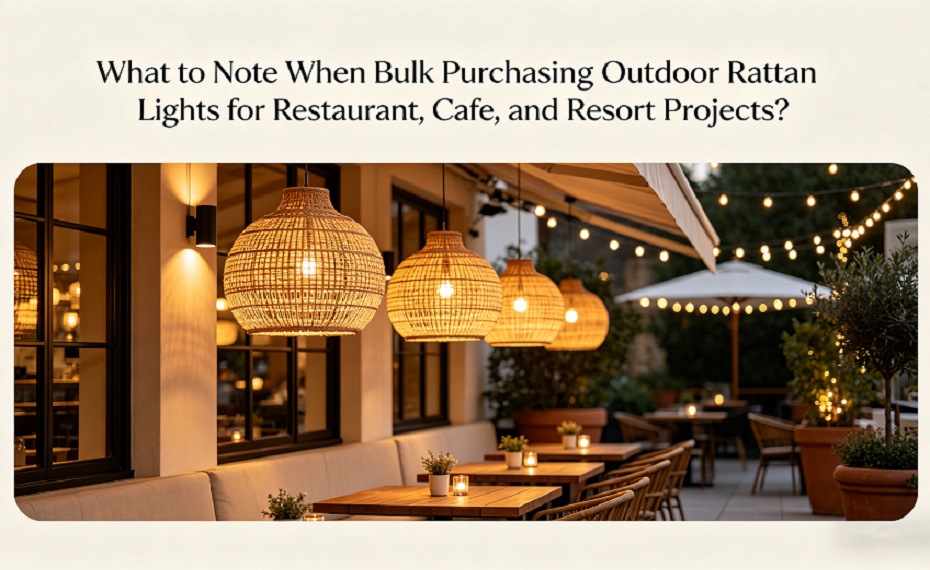
Drawing upon the diverse requirements of restaurants, cafés, and resorts, this blog post breaks down the critical considerations for bulk-purchasing outdoor rattan lighting. Each point is grounded in real-world project experience, designed to help you steer clear of 90% of the common procurement traps.
I. Define Your Specific Contextual Needs
Outdoor spaces in restaurants, cafes, and resorts serve distinct functions; consequently, the requirements for outdoor rattan lighting differ fundamentally across these settings. Before making a bulk purchase, it is crucial to first pinpoint your core needs. Many buyers simply ask suppliers to quote the lowest price without clearly articulating the specific context of their venue. The result is that the delivered lights often either fail to complement the aesthetic style or are ill-suited to the environmental conditions—this is the most common purchasing pitfall I have encountered.
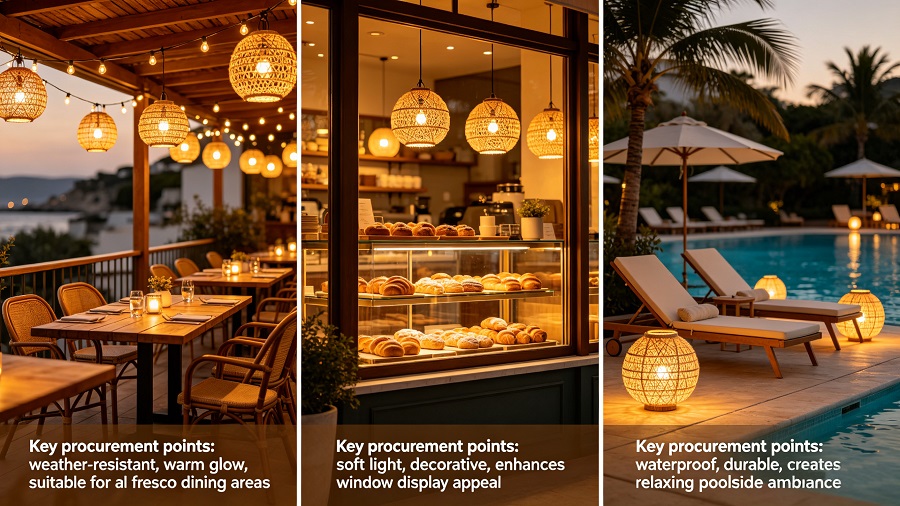
1. Restaurants: Balancing Atmosphere with Practicality—Prioritize "Easy-to-Clean" and "Oil-Resistant" Features
The primary objective for outdoor areas in restaurants (such as terraces or courtyards) is to cultivate a pleasant dining atmosphere. At the same time, these spaces must contend with issues such as cooking fumes and food residue. When making a purchase, focus on these three key points:
Style Compatibility: For Chinese-style restaurants, opt for dark-colored outdoor rattan lights featuring tight, intricate weaving patterns (e.g., deep brown or dark green); pair these with warm lighting to evoke a sense of elegance. Western-style restaurants and trendy "Instagrammable" venues are better suited to lighter-toned rattan lights (e.g., beige or light gray) with simple weaving textures, aligning well with modern "Insta-style" or vintage aesthetics. For late-night dining spots or BBQ restaurants, it is advisable to select hanging lights with superior water resistance to prevent cooking fumes from adhering to the fixtures, thereby avoiding cleaning difficulties.
Material Requirements: Prioritize UV-stabilized PE synthetic rattan. This material is resistant to oil and grease, easy to wipe down (often requiring nothing more than a damp cloth for cleaning), and highly resistant to aging and fading. It is ideally suited for long-term exposure to the complex and demanding outdoor environments typical of restaurants. Avoid using natural rattan, as it is prone to absorbing oil and developing mold; this results in extremely high long-term maintenance costs, and fixtures may begin to crack or warp within less than a year of bulk usage.
Lighting Parameters: Select a warm white light color temperature between 3000K and 4000K. This produces a soft, non-glaring glow that effectively illuminates the dining area while simultaneously fostering a cozy dining atmosphere. Avoid cool white light (which can appear stark and clinical) or excessively bright lighting (which may detract from the customers' dining experience). If the restaurant features an open-air dining area, consider selecting outdoor rattan lights with adjustable brightness settings to accommodate varying lighting requirements throughout the day and evening.
2. Coffee Shops: Prioritizing Aesthetics and Ambiance—Focusing on "Refinement and Photogenic Appeal"
The outdoor areas of a coffee shop (such as window seats and terraces) serve as the primary settings where customers take photos and "check in" on social media. Here, outdoor rattan lighting functions not merely as an illumination tool but as a key decorative highlight. When purchasing in bulk, the focus should be squarely on a combination of "visual appeal and attention to detail":
Style Selection: Prioritize compact and exquisite designs—such as woven rattan pendant lights or wall-mounted fixtures—while avoiding overly bulky floor lamps (which consume valuable space and may obstruct customer seating). Opt for rattan materials with a fine, delicate weave and a subtle textural quality; when paired with simple lampshades, these fixtures yield highly photogenic results that perfectly complement a coffee shop's artistic, laid-back atmosphere.
Color Coordination: Emphasize a light-toned color palette (such as ivory, light brown, or creamy beige), occasionally accented with small touches of contrasting color (such as pale blue or light green) to align with the coffee shop's fresh and airy aesthetic. Avoid selecting colors that are overly vivid or heavy, as these can easily disrupt the overall ambiance and detract from the visual quality of customers' photographs.
Design Details: It is advisable to select outdoor rattan lights featuring anti-glare designs to prevent direct light from shining into customers' eyes. If the coffee shop is equipped with outdoor power outlets, plug-in models are a viable option; if not, solar-powered outdoor rattan lights offer an energy-efficient and convenient alternative that also enhances the ambiance. However, when choosing solar models, pay close attention to the battery's runtime capacity; be sure to test the duration of illumination before committing to a bulk purchase.
3. Resorts
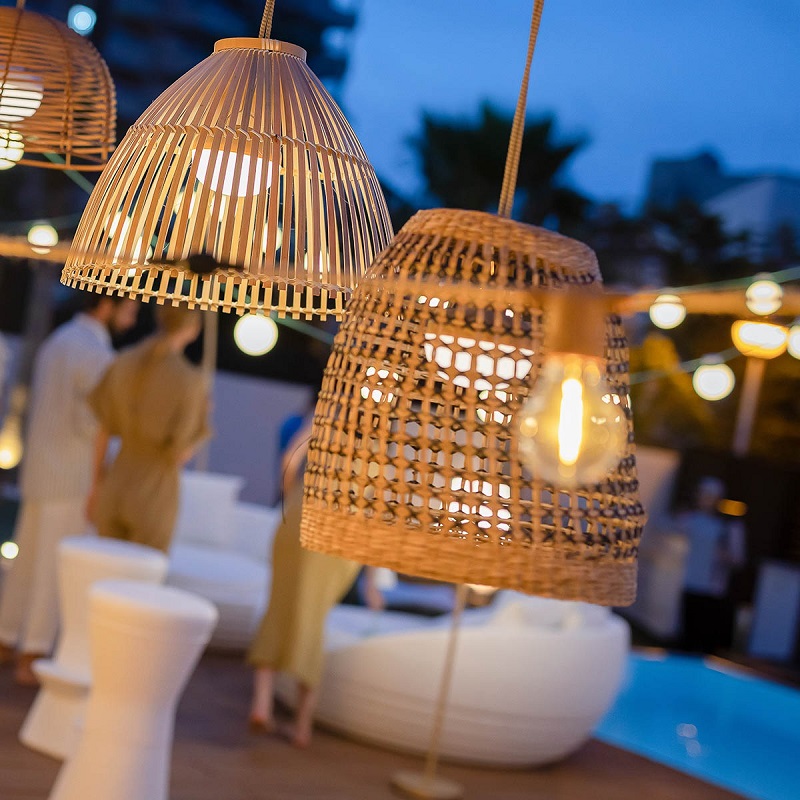
Resort outdoor areas—such as courtyards, poolside decks, and walkways—typically cover vast spaces and require a large volume of lighting fixtures. Furthermore, these fixtures are constantly exposed to sunlight, rain, high temperatures, and high humidity. In coastal resorts, certain areas may also face the risk of salt-mist corrosion. Consequently, when making bulk purchases, the primary focus should be on "durability and uniformity."
Material Requirements: It is imperative to select high-weather-resistance PE synthetic rattan infused with UV-resistant anti-aging agents to ensure the material remains fade-free and non-brittle for 3 to 5 years. For metal frames, priority should be given to aluminum alloy or stainless steel treated with rust-proof powder coating to prevent corrosion and deformation. This is particularly critical for seaside resorts, where materials specifically resistant to salt-mist corrosion must be chosen; otherwise, the frames may rust and deteriorate within less than a year.
Waterproof Rating: For outdoor rattan lighting fixtures situated near pools or coastal areas, the waterproof rating must meet IP67 standards. This ensures the fixtures can withstand brief submersion in water, thereby preventing rainwater or seawater intrusion into the lamp body that could lead to short circuits. For other areas, a minimum rating of IP65 is required to ensure resilience against severe weather conditions, such as heavy rain and typhoons. According to industry-standard QUV accelerated aging tests, high-quality IP67-rated outdoor rattan lights can maintain full functionality even after five years of outdoor exposure.
Stylistic Uniformity: When purchasing in bulk for a resort, it is essential to ensure that all outdoor rattan lighting fixtures—including their style, color, and dimensions—are uniform. This ensures they seamlessly integrate with the resort's overarching design aesthetic (whether tropical, minimalist, or leisure-oriented) and prevents a disjointed or cluttered appearance. While it is acceptable to strategically mix different types of rattan fixtures (such as pendant lights, floor lamps, and lawn lights) to delineate distinct functional zones, the overall stylistic theme must remain consistent throughout the property.
II. Core Procurement Priorities: Materials, Certifications, and Quality
Bulk purchasing outdoor rattan lighting fixtures implies that should any issues arise, the resulting losses could be substantial; therefore, these three core priorities must be strictly controlled.
1. Material Selection: Rejecting "Cheap, Inferior Rattan"
The durability of outdoor rattan lamps depends fundamentally on the materials used for the rattan itself and the metal frame. To drive down costs, many suppliers utilize inferior rattan materials (such as recycled PE or rattan lacking UV treatment) and standard iron frames. While these options may appear inexpensive initially, they incur extremely high maintenance costs in the long run—potentially even necessitating a complete bulk replacement—ultimately proving to be the more expensive choice.
Rattan Material Selection
Prioritize UV-stabilized PE synthetic rattan. This material features a refined texture and excellent resilience; with the addition of UV-resistant agents, it effectively withstands ultraviolet radiation, preventing fading and brittleness, and offers a service life of 5 to 8 years. A secondary option is PVC synthetic rattan, which is slightly lower in price and marginally less durable, making it suitable for cafes with limited budgets and relatively mild outdoor environments. Strictly avoid natural rattan—especially when purchasing in bulk—as it is prone to mold and cracking, difficult to maintain, and unsuitable for long-term outdoor use.
Pro Tip: Before placing a bulk order, request samples of the rattan material from the supplier. Test the sample by igniting it with a lighter: high-quality PE synthetic rattan burns without emitting a pungent odor, leaving behind white ash. Inferior PE rattan, conversely, emits a sharp, unpleasant odor when burned, produces black ash, and tends to drip. Additionally, request that the supplier provide UV aging test reports to ensure the material passes accelerated QUV aging tests, thereby preventing premature fading.
Metal Frame Selection
Prioritize aluminum alloy frames (lightweight, rust-proof, and corrosion-resistant), which are suitable for most outdoor settings. For seaside resorts, stainless steel frames are recommended to provide resistance against salt spray corrosion. Strictly avoid standard iron frames unless absolutely constrained by budget; in such cases, insist that the frames undergo an electroplated, waterproof coating treatment to prevent rust and deformation—issues that could potentially cause the light fixture to detach, posing a significant safety hazard.
Sources and Wiring Selection
For light sources, prioritize LED beads due to their energy efficiency, long lifespan (typically exceeding 50,000 hours), and low heat emission—a feature that prevents high temperatures from damaging the rattan material. For wiring, it is imperative to select specialized outdoor-grade waterproof cables with a cross-sectional area of no less than 0.75 mm² to ensure excellent insulation and prevent short circuits or electrical leakage. When making bulk purchases, request that the supplier provide test reports for both the light sources and the wiring to verify compliance with safety standards.
2. Certification Compliance: Certification requirements vary significantly across different markets
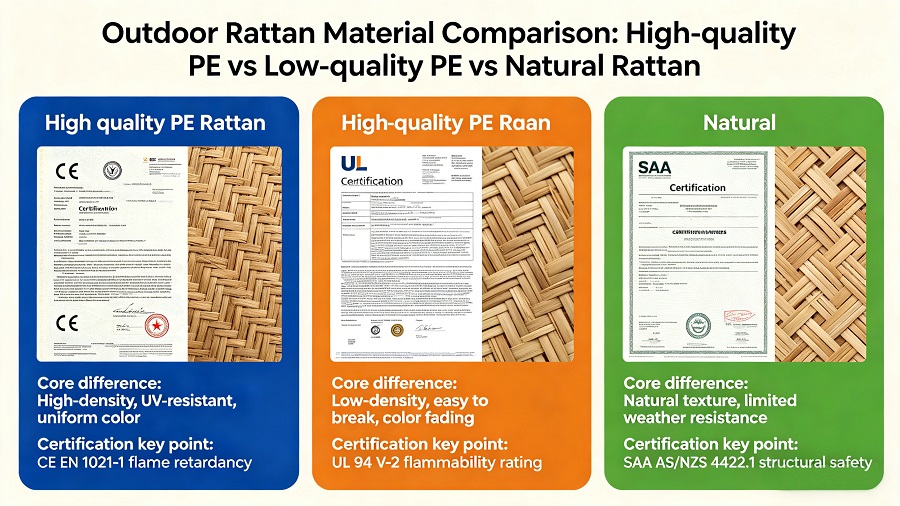
Note: When making bulk purchases, it is imperative to require suppliers to provide authentic and valid certification documents rather than relying on verbal assurances. You can verify the authenticity of the certification numbers by visiting the official websites of the certifying bodies to prevent suppliers from furnishing fraudulent certifications—as such falsifications not only result in customs clearance failures but also expose you to legal liability. Furthermore, certification marks must be clearly and legibly displayed on the light fixtures themselves, ensuring they remain unobstructed; failure to do so may also jeopardize customs clearance and compliance inspections.
3. Quality Control
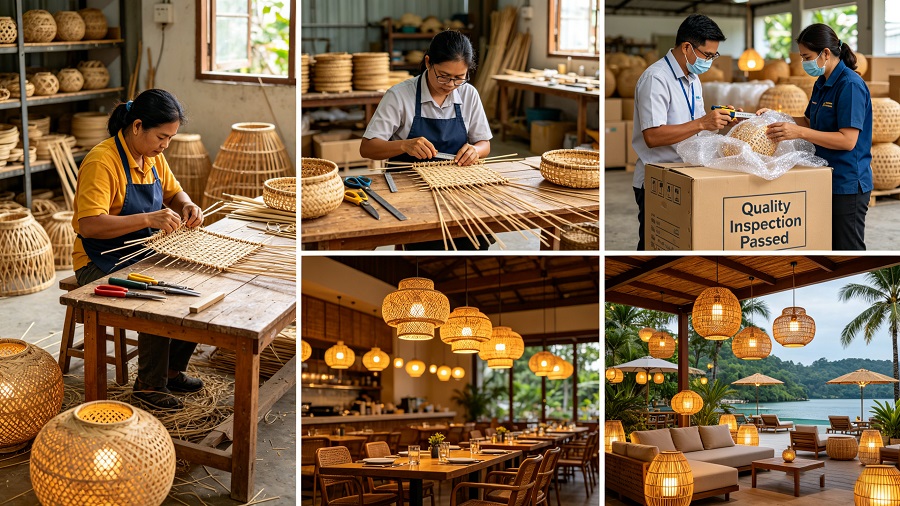
When purchasing outdoor rattan lamps in bulk, "quality consistency" is paramount. If even a few lamps out of several hundred prove defective, the entire project schedule can be disrupted, and the costs associated with rework are extremely high. Drawing upon practical experience, strict inspection across the following three stages is absolutely essential—none can be omitted:
Sample Inspection (Most Critical):
Before mass production begins, you must require the supplier to send physical samples. These samples must be identical to the lamps that will be produced in the subsequent mass run (in terms of materials, style, color, and lighting specifications). Key points to check during this inspection include: Is the rattan weaving uniform and free of loose strands? Are the metal frames smooth, scratch-free, and properly treated for rust prevention? Is the waterproofing seal on the lamp body intact? Is the lighting soft and free of flickering? Are all certification marks clearly legible? Once the samples are deemed satisfactory, sign a formal "Sample Approval Form" explicitly stipulating that "mass production must strictly match the approved samples" to prevent any quality deviations later on.
In-Production Inspection:
If the order volume is substantial (exceeding 500 units), it is advisable to assign a dedicated representative—or engage a third-party inspection agency—to visit the supplier's factory. The primary focus of this visit should be to verify that the materials used during production match the approved samples, that the weaving techniques adhere to established standards, and that waterproofing treatments are applied correctly, thereby preventing the supplier from cutting corners. This step is particularly critical for resort development projects, which typically involve large-scale orders and exacting quality standards; in-production inspections serve as an effective means of mitigating quality-related risks.
Pre-Shipment Inspection (Mandatory):
Upon the completion of mass production, a comprehensive inspection must be conducted prior to shipment. This final check should focus on three key areas:
· Quality Consistency: Randomly select a sample of 10% to 20% of the lamps to verify that the style, color, and materials are consistent across the batch, with no discernible discrepancies.
· Functional Testing: Test the on/off switch functionality, light brightness (for adjustable models), and waterproofing performance of each individual lamp.
· Packaging Inspection: Ensure that the packaging is robust and incorporates adequate shock-absorbing and moisture-proofing measures to prevent damage during transit.
III. Supplier Selection: Avoiding the "Low-Price Trap" by Focusing on 3 Key Indicators
When making bulk purchases of outdoor rattan lighting, the choice of supplier directly determines product quality, delivery timelines, and after-sales service. Many buyers blindly chase the lowest price, opting for small-scale, workshop-style suppliers. Ultimately, this results in substandard quality, delayed deliveries, and a complete lack of after-sales support—thereby hindering project progress and driving up overall costs.
1. Supplier Credentials: Prioritize Manufacturers with "Project Experience"
Bulk purchasing for restaurants, cafes, and resorts differs significantly from standard retail purchasing. It requires suppliers to possess extensive project experience, understand the specific needs of various business formats, and be capable of providing professional, tailored solutions. When selecting a supplier, focus on these three key points:
Do they have a portfolio of restaurant or resort projects?
Request that the supplier provide examples of their past bulk purchasing projects for restaurants, cafes, or resorts. Ideally, they should be able to furnish actual site photos and copies of collaboration contracts to demonstrate their capability to handle project-scale bulk orders. Avoid suppliers lacking project experience; such vendors often fail to grasp specific project requirements, leading to communication breakdowns, quality deficiencies, and other issues. As a major global hub for rattan lighting manufacturing, China is home to many factories with extensive project experience. Prioritize those with export credentials and a rich portfolio of case studies—XINSANXING stands out as a prime example of such a supplier.
Do they possess a robust production system?
Conduct an on-site visit—or request real-time factory video footage—to verify that the supplier operates its own production workshops, employs dedicated weaving artisans, and maintains an in-house QC team. Confirm that they possess genuine bulk production capabilities (e.g., a monthly output capacity of ≥500 units). Avoid selecting "middlemen" or "private-label resellers"; these intermediaries lack their own manufacturing facilities, making it impossible for them to control product quality or delivery schedules. Furthermore, their after-sales response times are typically slow, and they are prone to shifting blame or engaging in bureaucratic stalling when issues arise.
Do they hold valid compliance certifications?
Verify that the supplier can provide the relevant certification documentation (such as CE, UL, SAA, 3C, etc.) and is willing to cooperate by furnishing corresponding test reports. This ensures that your shipment will not face clearance issues at customs or fail regulatory compliance inspections.
2. Lead Times and After-Sales Support
For projects involving restaurants, cafes, and resorts, construction schedules are often tight; consequently, the lead time for outdoor rattan lighting directly impacts the project's overall progress. To secure orders, many suppliers blindly promise unrealistically short lead times, only to fail to deliver on schedule later—resulting in project delays and leaving the purchasing party to bear the costs of breach of contract.
Lead Time Agreements:
Before placing a bulk order, clearly define the delivery schedule with the supplier based on the project's timeline. Furthermore, explicitly stipulate "liabilities for late delivery" within the contract (e.g., deducting a specific percentage of the payment for every day of delay). Simultaneously, require the supplier to provide a production schedule and to provide regular updates on production progress to ensure on-time delivery. Generally, the lead time for bulk orders ranges from 30 to 40 days (adjusted based on order volume and customization complexity); it is advisable to build in a buffer of 3 to 5 days to mitigate potential delays caused by production, logistics, or other unforeseen issues.
After-Sales Guarantees:
With bulk purchases of outdoor rattan lighting, it is inevitable that isolated issues—such as physical damage to individual fixtures or functional malfunctions—may arise over time; therefore, robust after-sales support is crucial. When selecting a supplier, clearly define the terms of after-sales service: for instance, the warranty period (at least one year, though high-quality suppliers may offer a two-year warranty); the scope of coverage (covering non-human-induced damage to the fixture body, light source, and mounting brackets); and the after-sales response time (responding within 24 hours and providing a resolution within 72 hours). In the event of systemic quality issues affecting a batch of products, require the supplier to unconditionally rework or replace the defective items and to bear all associated logistics costs.
3. Price Negotiation: Resist the Lure of "Rock-Bottom Prices" and Prioritize "Cost-Effectiveness"
When making bulk purchases, cost control is crucial; however, one must never blindly chase the lowest price. Low prices often signify inferior materials, shoddy workmanship, and a lack of necessary certifications—factors that lead to exorbitant long-term maintenance costs, ultimately making the purchase a false economy. During price negotiations, focus on these three key points:
Limit Price Comparisons to No More Than Three Vendors
Select 2–3 qualified suppliers with relevant project experience for price comparisons. Avoid engaging too many vendors, as this dilutes your focus and makes it easy to fall into the trap of "cutthroat price competition." When comparing quotes, look beyond just the unit price; consider a comprehensive range of factors—including materials, certifications, after-sales support, and delivery timelines—to conduct a holistic assessment of cost-effectiveness.
Negotiate Volume Discounts
The larger the purchase volume, the greater the potential for discounts. Negotiate volume-based incentives with your suppliers (e.g., a 5% discount for orders over 100 units, or an 8% discount for orders over 300 units). Additionally, request supplementary benefits—such as free samples or complimentary packaging upgrades—to further reduce your overall procurement costs.
Establish Clear Payment Terms
Structure your payment terms logically and reasonably. For instance: "30% upfront deposit; 40% paid upon sample approval; 20% paid after a successful pre-shipment inspection; and the final 10% paid upon the conclusion of the warranty period." This phased payment structure serves a dual purpose: it incentivizes the supplier to maintain production momentum while simultaneously safeguarding the buyer's interests, thereby preventing issues such as suppliers cutting corners or delaying delivery after payment has been made.
Conclusion
For restaurants, cafes, and resorts, the bulk procurement of outdoor rattan lighting is, at its core, a process of balancing competing priorities—specifically, balancing requirements against costs, and quality against regulatory compliance. There is no single "best" outdoor rattan lamp; rather, the ideal choice is the one that is best suited to your specific setting. By selecting a supplier with proven project experience and robust after-sales support—while avoiding the pitfalls of unrealistically low prices and maintaining strict oversight during the inspection phase—you can successfully navigate the bulk procurement process. This ensures not only that your project stays on schedule but also that you acquire outdoor rattan lighting of superior quality that perfectly complements your venue.
In closing, we hope this blog post helps you steer clear of common pitfalls and complete your procurement efficiently. May your outdoor rattan lighting become a standout feature of your restaurant, cafe, or resort, thereby enhancing the customer experience and driving increased foot traffic to your establishment.
Looking for a professional manufacturer of outdoor lighting projects?
FAQ
Priority should be given to UV-stabilized PE synthetic rattan. This is the material best suited for outdoor settings, offering strong weather resistance, ease of cleaning, fade resistance, and a long service life (5–8 years), making it ideal for the complex outdoor environments found at restaurants, cafes, and resorts. Cafes with limited budgets may opt for PVC synthetic rattan. Natural rattan is not recommended, as it is prone to mold, cracking, and requires difficult maintenance.
This depends on the target market:
The EU market requires CE certification (covering LVD, EMC, RoHS, and ErP).
The US/Canadian market requires UL/ETL certification, while models featuring wireless controls require additional FCC certification.
The Australian/New Zealand market requires SAA certification, and the Chinese market requires 3C certification.
The standard lead time is 30–40 days, though this varies depending on the order quantity and the complexity of any customizations. The keys to avoiding delays are:
1. Clearly stipulate the delivery deadline and the penalties for late delivery within the contract;
2. Require the supplier to provide a production schedule and provide regular progress updates;
3. Build in a buffer of 3–5 days to account for unforeseen issues in production or logistics;
4. Select a supplier with strong production capabilities and proven project experience to avoid the risks associated with small-scale workshops that may be unable to deliver on time (e.g., XINSANXING Lighting).
First, clearly define the after-sales terms in the contract (including the warranty period, scope of coverage, and response time for support requests). If a quality issue arises, immediately take photos and videos to document the evidence, then contact the supplier to request a resolution within the agreed-upon timeframe. If only a few individual lamps are damaged, you may request that the supplier ship replacement units. If quality issues are widespread across the batch (e.g., extensive fading or water leakage), demand that the supplier unconditionally rework or replace the defective items, and require them to cover the associated logistics costs as well as any losses incurred due to project delays.
Opt for compact and exquisite designs—such as woven pendant lights or wall-mounted fixtures—featuring fine textures and a predominantly light color palette (such as ecru, light brown, or creamy beige). These choices align perfectly with the artistic and laid-back ambiance of a café, creating an ideal backdrop for customers to take aesthetically pleasing photos. In terms of materials, select UV-stabilized PE synthetic rattan; this material is easy to clean, fade-resistant, and durable enough to withstand outdoor environments. For lighting, choose a warm white color temperature between 3000K and 4000K, incorporating an anti-glare design to prevent direct light from shining into customers' eyes. You may also opt for solar-powered models or fixtures with adjustable brightness settings to strike a balance between practicality and atmospheric effect. At the same time, avoid overly intricate designs to minimize production and maintenance costs.
This depends on the specific installation environment:
1. For poolside or seaside areas, the waterproof rating must reach IP67. This allows the fixtures to withstand brief immersion in water and prevents rainwater or seawater from seeping into the lamp body.
2. For general outdoor areas such as courtyards and walkways, the waterproof rating should be at least IP65 to ensure the fixtures can withstand severe weather conditions, such as heavy rain and typhoons.
When purchasing, request that the supplier provide waterproof test reports—tested in accordance with the IEC 60529 standard—to verify that the waterproof performance meets the required benchmarks and to prevent safety hazards such as short circuits or electrical leakage.
1. Negotiate Bulk Discounts:** The larger the purchase volume, the greater the potential for savings; negotiate bulk discounts directly with the supplier.
2. Simplify Customization:** Avoid overly complex personalized designs; instead, opt for standard models to reduce production complexity and costs.
3. Select Cost-Effective Materials:** Prioritize UV-stabilized PE synthetic rattan. Although the unit price may be slightly higher, its extended lifespan and lower long-term maintenance costs result in superior overall value.
4. Establish Reasonable Payment Terms:** Adopt a structured payment schedule—such as "deposit + progress payments + final balance"—to avoid large lump-sum payments and mitigate financial risk.
5. Allocate for Spare Units:** Stocking a reserve of spare lights prevents the need for subsequent re-purchases, which can drive up costs. Additionally, consider selecting energy-efficient LED light sources to reduce long-term energy consumption costs.
Focus on three key areas:
1. Relevant Project Case Studies:** Request that the supplier provide examples of past bulk procurement projects for restaurants or resorts, including actual installation photos and copies of previous contracts.
2. Comprehensive Production System:** Verify that the supplier possesses its own production facility and QC team, and that its monthly production capacity is sufficient to meet the requirements of the bulk order.
3. Compliance and Certification Credentials:** Ensure the supplier can provide relevant certification documents and test reports, and is willing to cooperate with compliance checks. If feasible, conduct an on-site factory inspection—or request a live video tour of the facility—to further verify their production capabilities. Prioritize suppliers that hold export qualifications and have previously partnered with reputable restaurant or resort brands, as this offers a greater level of assurance.
Recommended Content:
Post time: Apr-24-2026