


From lighting layout recommendations to customized material selection, we offer comprehensive support for your entire project. Click the button on the right to consult with our engineering advisors.
Why Have Rattan Light Fixtures Become the Preferred Choice for Resorts and Restaurants Worldwide?
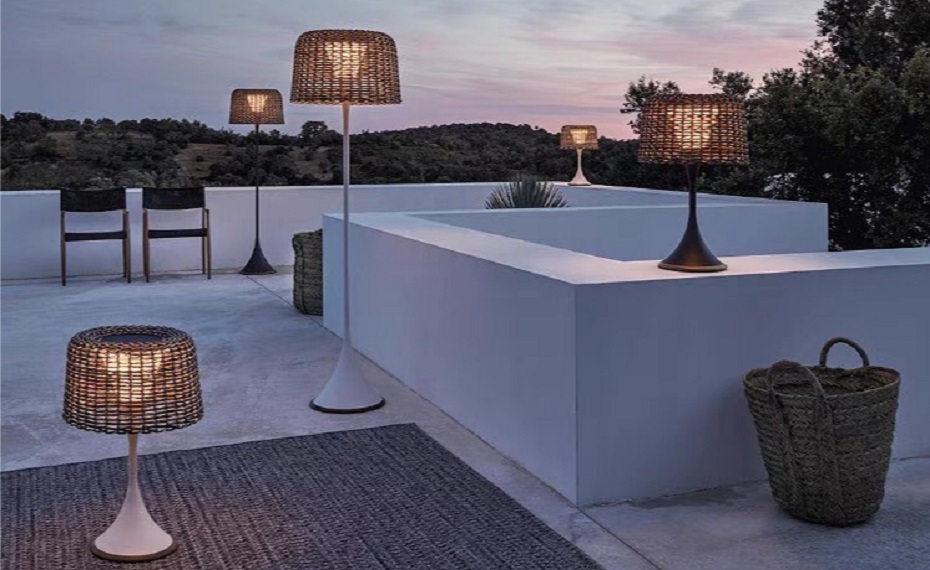
Here in 2026, as we step into a high-end resort in Bali or an open-air restaurant situated on Miami Beach, we observe a fascinating phenomenon: those cold, industrial-style metal streetlights are quietly fading away, replaced by rattan lighting systems that radiate a warm glow and exude a rich, organic texture.
As XINSANXING—a seasoned manufacturer in the field of outdoor decorative lighting—we have witnessed their transformative journey from being mere "niche artisanal accessories" to becoming a "standard staple" in commercial lighting design. This shift is no mere coincidence; rather, it is the result of a powerful synergy between design aesthetics, material evolution, and sustainable energy technologies.
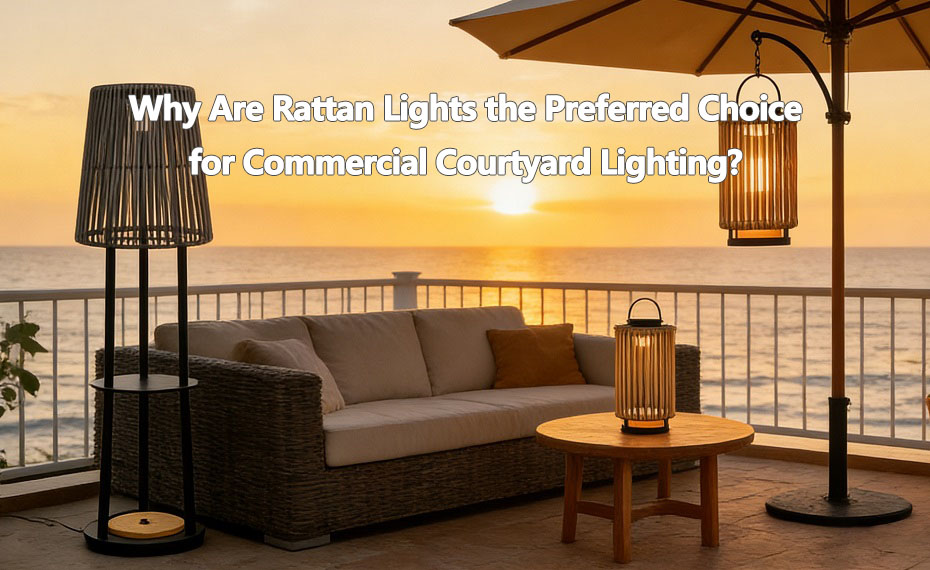
I. Visual Psychology: From "Illuminating Space" to "Cultivating Mood"
Initially, the primary function of lighting fixtures in commercial courtyard design was simply to provide illumination. However, as design has evolved, people now place a greater emphasis on the enjoyment of leisure time; a beautiful atmosphere resonates deeply with our innate desire for warmth and comfort. Woven rattan lighting fixtures serve as an exceptional choice for creating precisely this kind of ambiance.
1. The Warmth of Materials
Modern lighting fixtures—crafted from materials such as metal and glass—can, on a psychological level, evoke a sense of "detachment" or aloofness. In contrast, natural or faux-natural materials—such as woven rattan and braided cords—possess intricate interlaced structures that inherently carry a strong humanistic spirit and the warmth of handcrafted artistry, thereby fostering a deeper emotional resonance with people.
2. The Unique "Art of Shadows"
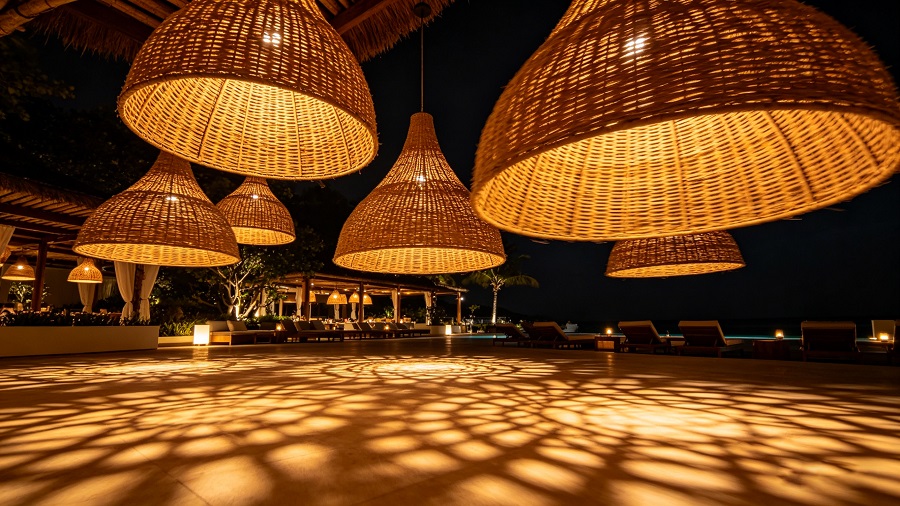
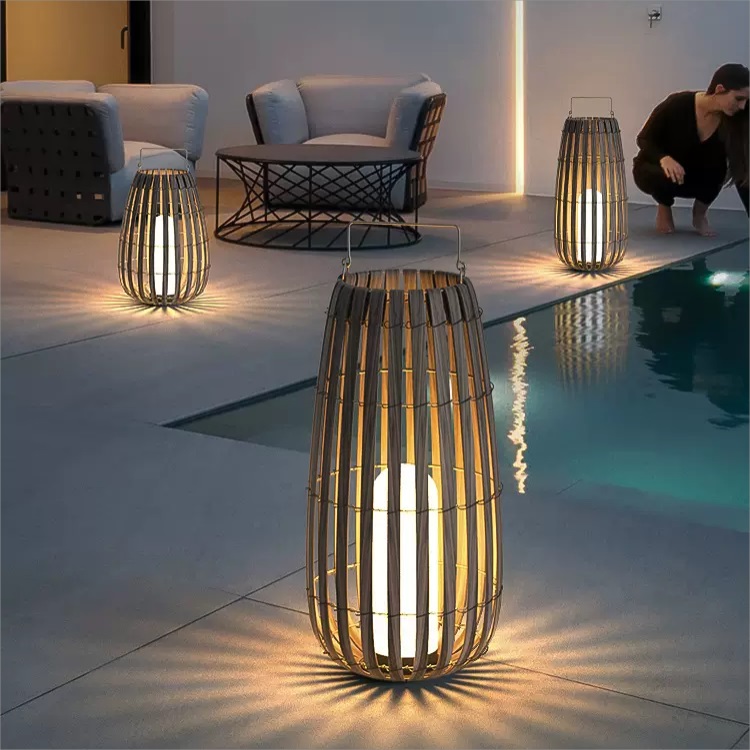
Compared to the uniform light emitted by standard spherical fixtures, the most captivating feature of woven rattan lighting lies in the texture of its shadows. As light filters through the woven interstices, it casts dappled, intricate, and rhythmic patterns of light and shadow across the ground and walls. This effect—a "symbiosis of light and shadow"—vastly enriches the spatial layering and depth, instantly transforming an ordinary outdoor terrace into a highly attractive, Instagram-worthy destination.
II. The Evolution of Commercial Durability: From Natural Rattan to High-Performance PE Synthetic Rattan
A common initial concern among many commercial clients is: "How long can rattan-woven materials truly withstand the outdoors?"
Due to their inherent material properties, early natural rattan furnishings indeed struggled to endure exposure to wind and sun. However, as a professional manufacturer, we now utilize highly weather-resistant Polyethylene (PE) synthetic rattan for all our outdoor lighting fixtures, thereby fundamentally eliminating these potential durability risks.
All-Weather Resistance: Commercial environments—particularly seaside resorts—face the rigorous challenges of high salt spray, extreme humidity, and intense UV radiation. High-quality PE rattan is infused with UV stabilizers during the manufacturing process, ensuring that the material remains free from brittleness and fading within a temperature range of -20°C to 60°C.
Maintenance Costs (Labor): Maintenance is often the biggest headache for commercial operators. While natural rattan requires regular oiling and mold prevention treatments, PE synthetic rattan simply requires periodic rinsing with water. For hotels managing hundreds of lighting fixtures, this translates into substantial savings on operational costs.
Structural Integrity: We construct our internal frames using powder-coated aluminum alloy or stainless steel. When combined with the inherent resilience of PE rattan, this design ensures that our lighting fixtures are not only lightweight but also possess exceptional structural strength, capable of withstanding the onslaught of strong outdoor winds.
III. Energy Strategy for Solar Systems
For commercial projects, the installation of every single light fixture entails costs for cable laying, labor, and subsequent high electricity bills. This is precisely why solar-powered rattan lights have seen such a rapid rise in popularity:
1. No Wiring Costs
If you were to add 50 landscape lights to the garden of an established resort, a traditional wired solution would likely require disrupting the lawn, trenching, and laying waterproof conduits—with labor costs often amounting to three times the cost of the fixtures themselves. Solar systems, however, offer a "place-and-use" solution that requires no disruption to the existing landscape.
2. Intelligent Light Control Management
Modern solar lighting fixtures, equipped with high-efficiency monocrystalline silicon panels and lithium iron phosphate batteries, are now capable of delivering stable, continuous illumination.
· Light-Sensing System: Automatically switches on at dusk and off at dawn, requiring no manual intervention.
· Automatic Sensing: The fixtures feature built-in radar sensors that automatically detect movement; when a person passes by, the brightness increases to 100%, and once they have moved on, the brightness returns to 70%.
· Extended Battery Life: Optimized LED chip solutions ensure stable illumination for 8–12 hours, even in conditions with insufficient sunlight. Furthermore, the brightness level automatically adjusts based on the duration of operation: starting at 100% brightness, it automatically reduces by 30% every 3–4 hours thereafter to maximize the total illumination time.
Let's do a simple cost analysis:
Let $A represent the combined installation and average annual electricity costs for a single wired light fixture, and let $B represent the cost of a single solar light fixture. In a commercial setting, although the initial purchase price ($B) for a solar light may be slightly higher, the installation costs are virtually zero. Consequently, the investment typically breaks even within 6–9 months, after which the full cost-saving benefits of the solar lighting system become clearly evident.
IV. Solutions for Diverse Application Scenarios of Woven Outdoor Lighting
The popularity of woven lighting can also be attributed to its remarkable adaptability to various spatial environments.
1. Poolside and Water Features
Placing a few solar-powered woven lanterns and floor lamps around a swimming pool creates a mesmerizing interplay between the reflections on the water's surface and the intricate shadows cast by the woven fixtures, resulting in a heightened sense of visual beauty. Furthermore, since solar-powered woven lights require no connection to AC power, they completely eliminate the risk of electric shock for guests in the vicinity of the pool.
2. Open-Air Dining Areas
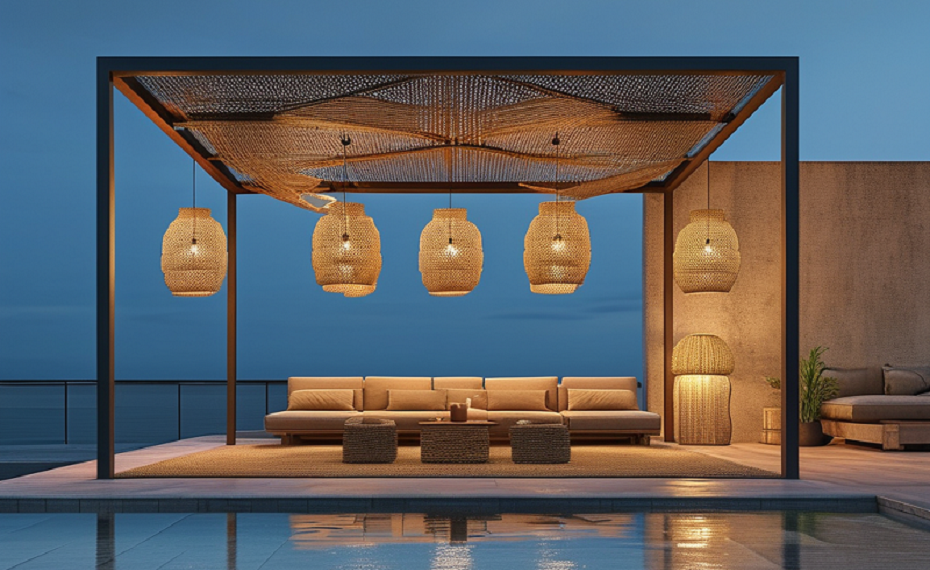
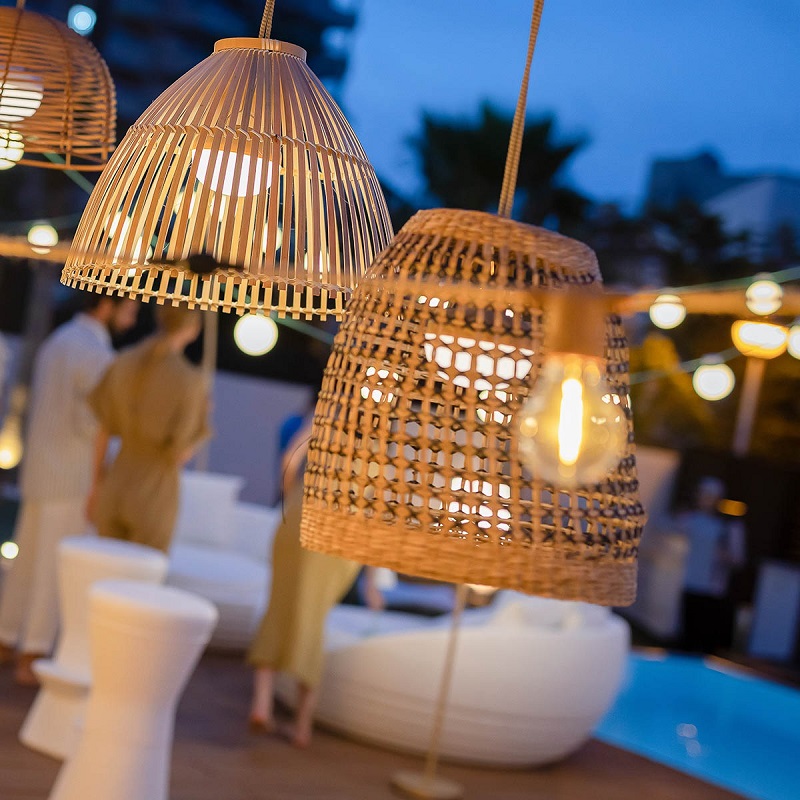
Low-hanging pendant lights crafted from woven rope or slender rattan effectively delineate private spaces for guests, fostering a sense of being "enveloped" in a secure and intimate setting. From a psychological perspective, this significantly enhances the guests' dining comfort—making them feel that the experience is well worth the cost, even if the average check value is on the higher side.
3. Garden Pathways
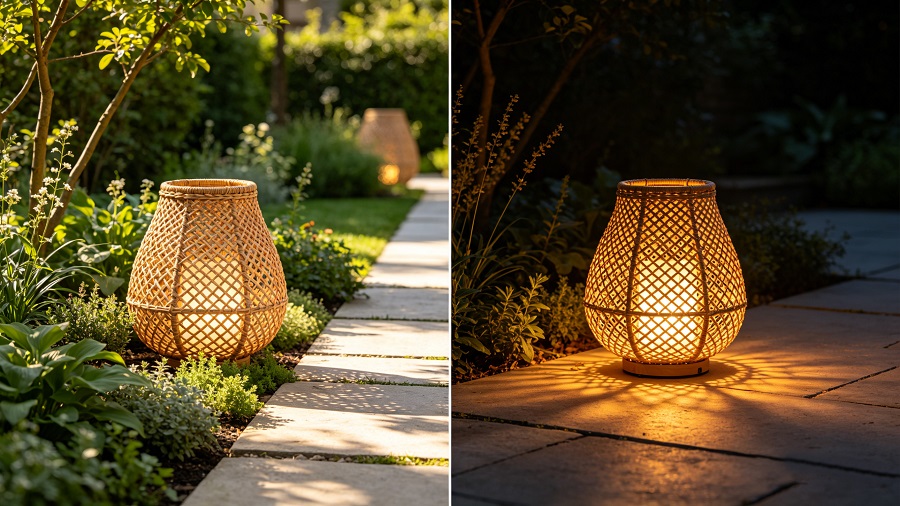
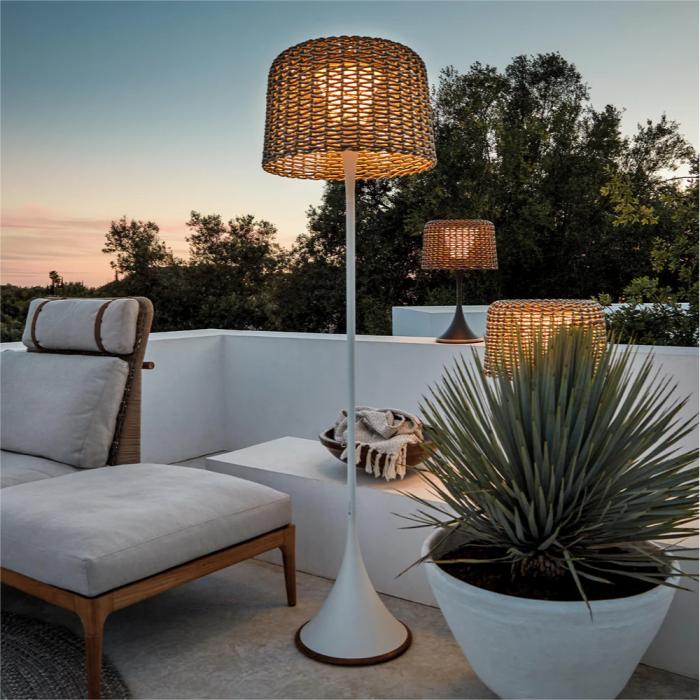
Floor-standing woven lanterns serve as far more than mere lighting fixtures; they act as sculptural works of art within the garden, adding a unique aesthetic accent to tranquil pathways.
V. A Manufacturer's Perspective: How to Identify High-Quality Commercial Rattan Lighting?
If you are a B2B buyer, do not be swayed by low-priced products. A professional commercial lighting solution should possess the following characteristics:
· IP Rating (Water and Dust Resistance): For outdoor environments, an IP65 rating is the absolute minimum standard. This ensures the fixture can withstand daily outdoor weather conditions—including wind and rain—without sustaining damage.
· CRI (Color Rendering Index): In resort settings, it is essential to faithfully reproduce the natural beauty of food and skin tones; therefore, the light source should have a CRI of greater than 80.
· Driver and Battery Safety: In commercial environments, robust charge and discharge protection mechanisms for batteries are critical. These mechanisms determine whether the fixture's lifespan will be shortened—or even pose a safety hazard—due to overheating.
· Tensile Strength: For woven rope fixtures, potential deformation under tension must be carefully considered. Professional manufacturers employ internal support structures to prevent distortion caused by prolonged suspension.
Conclusion: Embracing a Future of "Natural Aesthetics"
The future of commercial courtyard lighting is no longer merely a cold, technical arms race; rather, it is about how technology can best serve humanity's innate desire to reconnect with nature.
Rattan-style lighting owes its immense popularity to the fact that, while effectively addressing the functional need for illumination, it simultaneously and artfully responds to people's instinctive yearning for natural materials. For us as manufacturers, our mission is to ensure that this aesthetic beauty stands the test of time in outdoor environments—achieved through innovations in PE materials and advancements in solar energy efficiency.
Are you planning a new commercial project?
Recommended Content:
Post time: Apr-23-2026