


Transform your outdoor space with outdoor rattan light today, and enjoy a cozy, inviting area that you’ll love spending time in all year long.
Every new importer faces the same critical question: should I buy directly from a factory or a trading company?
Many buyers blindly chase factories for lower prices, while others prefer trading companies for simpler communication. The truth is — neither option is universally better. The best choice depends on your order quantity, budget, customization needs, and importing experience.
This article breaks down the real differences between manufacturers and trading companies based on years of B2B sourcing experience.
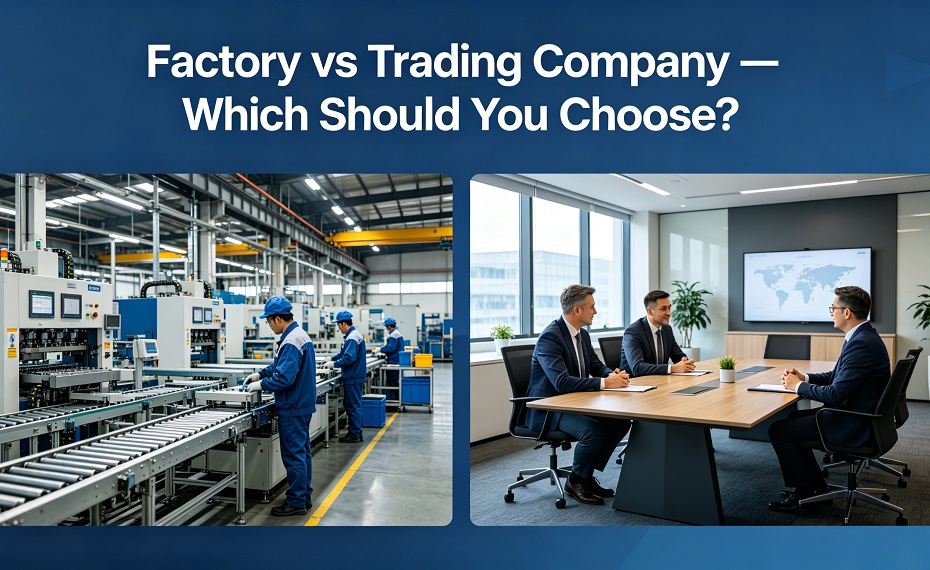
Ⅰ. What Is a Manufacturer Factory?
A factory is a physical production facility that owns raw material supply, assembly lines, workers, and production equipment. Manufacturers focus only on producing specific product categories, such as outdoor lights, furniture, or home decor.
Factories serve bulk buyers. Their core advantages lie in raw material control, customizable production, and transparent manufacturing processes. Most genuine factories have fixed production workshops, production machines, and stable worker teams.
However, factories usually have higher MOQ and stricter order requirements. They are not designed for small, scattered orders.
Ⅱ. What Is a Trading Company?
A trading company is an intermediate wholesaler without its own production lines. It cooperates with multiple factories, collects different products, and provides one-stop purchasing services for global buyers.
Trading companies excel at flexible order mixing, low MOQ, multilingual communication, and simple logistics arrangement. They select qualified factory products, recheck quality, and offer unified export documents.
For small retailers and first-time importers, trading companies are easier to cooperate with, even though the unit price is slightly higher.
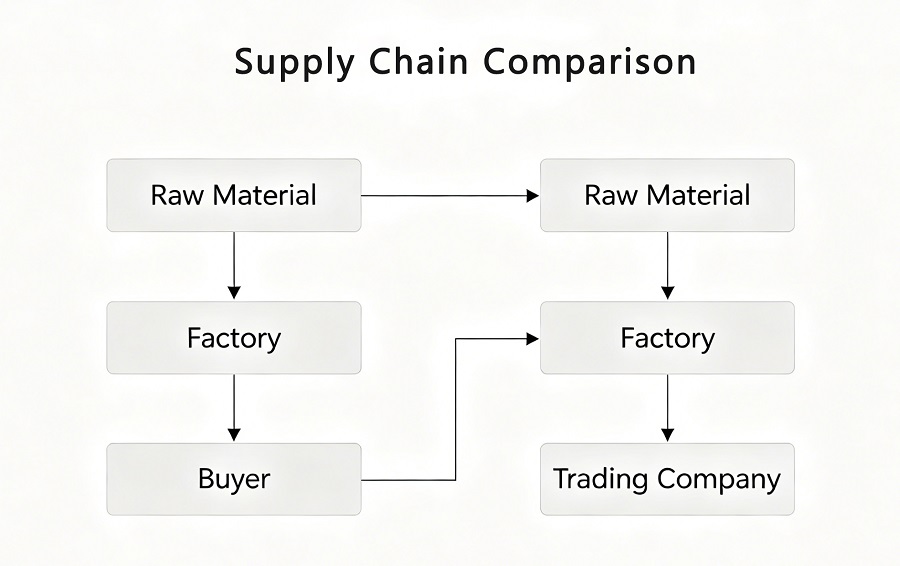
Ⅲ. Direct Comparison: Factory vs Trading Company
This clear comparison table shows the real differences that every importer must know:
|
Comparison Item
|
Factory (Manufacturer)
|
Trading Company
|
|
Unit Price
|
Lower (No middle markup)
|
Slightly higher (Service fee included)
|
|
MOQ Requirement
|
High (200+ pcs usually)
|
Low (10-50 pcs stock order)
|
|
Customization
|
Full customization supported
|
Limited customization
|
|
Product Range
|
Single product category
|
Multiple mixed products
|
|
Communication
|
Basic English, technical focus
|
Fluent English, buyer-oriented service
|
|
Lead Time
|
Longer production cycle
|
Fast stock shipment
|
|
After-sales
|
Strictly production-related issues
|
Full one-stop after-sales support
|
Ⅳ. Pros & Cons of Working With a Factory
1. Advantages
- Better pricing: No intermediate markup, obvious cost advantage for bulk orders.
- Full customization: Custom size, color, logo, material, and packaging.
- Transparent production: Buyers can audit workshops, check raw materials, and monitor production.
- Long-term stability: Stable quality for repeated large orders.
2. Disadvantages
- Higher MOQ: Factories refuse tiny trial orders.
- Strict order rules: Hard to mix different product models.
- Simple communication: Many factory sales lack fluent English and international trade experience.
- Complicated process: Buyers need to handle logistics and documents independently.
Ⅴ. Pros & Cons of Working With a Trading Company
1. Advantages
- Low MOQ flexibility: Perfect for small retailers and startup sellers.
- Mixed batch allowed: Combine different items into one container.
- Smooth communication: Professional English-speaking sales team.
- Simplified import process: They handle packing, inspection, customs files, and shipping arrangement.
2. Disadvantages
- Higher unit price: Service markup increases overall cost.
- Limited customization: Hard to modify molds or special structures.
- Unclear supply chain: Buyers cannot trace the real production factory.
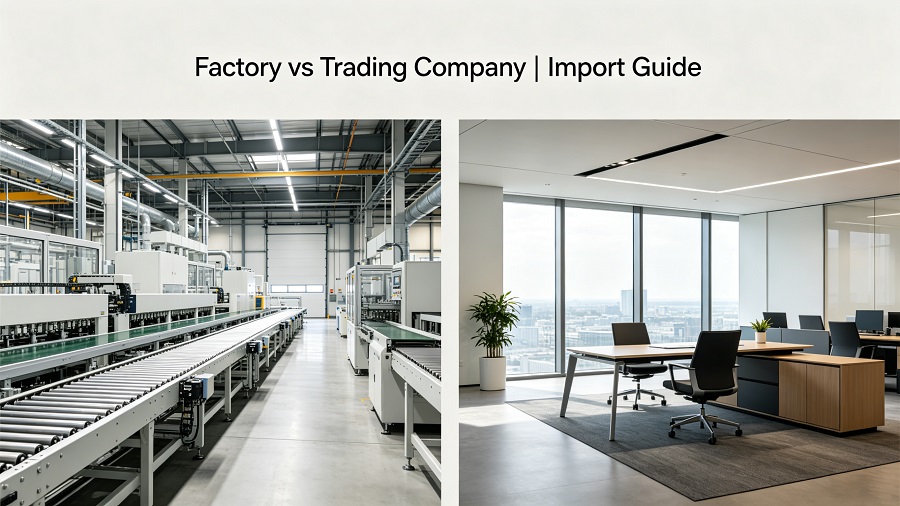
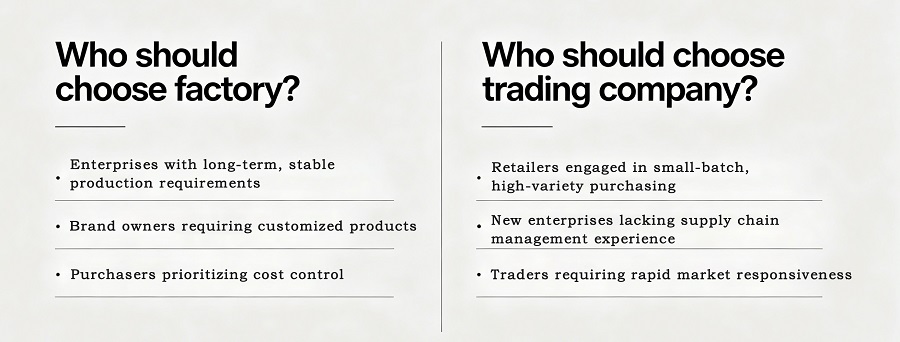
Ⅵ. Which One Is Better for Different Buyers?
1. Choose a Factory If You Are:
- Wholesalers with monthly orders over 500 units.
- Brands needing private labeling and exclusive customization.
- Engineering or hotel project buyers.
- Experienced importers who control supply chains independently.
2. Choose a Trading Company If You Are:
- Small retailers, Amazon sellers, and boutique store owners.
- New importers without trade experience.
- Buyers who need mixed product batches.
- Buyers looking for low-risk trial orders.
Ⅶ. Red Flags to Avoid Scams
No matter which supplier type you choose, watch out for these common warning signs:
- Fake factory certification: Cannot provide workshop videos or production photos.
- Unreasonably low price: Too-good prices always mean downgraded raw materials.
- Vague product parameters: Avoid suppliers who cannot list material, IP rating, or test reports.
- Refuse sample orders: Reliable suppliers always support sample testing.


Conclusion
Factories are for bulk; trading companies are for flexibility.
If you are a small or new importer, start with a qualified trading company to test markets with low MOQ and simple procedures. Once your sales grow and you have stable demand, switch to a professional factory to reduce costs and upgrade customization.
There is no absolute “better” supplier type. The wisest importing strategy is matching your business stage with the right supplier.
So Why Wait?
FAQ
Yes, but the price difference is reasonable. Trading companies add a small service fee for quality checking, document arrangement, and communication support. For small orders, the extra cost is worthwhile to avoid trade risks.
Simple customization like logo printing or color boxes is available. Complex mold modification, structural redesign, and exclusive raw material upgrades must be done by factories.
Request workshop videos, production line photos, business licenses, and daily production capacity data. Real factories always have fixed machinery, assembly lines, and warehouse areas.
Not recommended. Factories require high MOQ, strict payment terms, and independent import experience. New buyers easily face overstock, miscommunication, and shipping trouble.
Absolutely. Many stable large buyers start with trading companies for trial orders, then cooperate directly with factories after confirming market demand.
Recommended Content:
If You Are in Business, You May Like



Post time: May-21-2026