


As a designer/manufacturer with many years of experience in the lighting and home furnishing materials industry, I'm often asked, ' Is rattan or plastic lighting better for winter? ' The answer isn't black and white; it requires analysis from multiple perspectives: material performance, environmental impact, aesthetics, safety, and lifespan.
The following, drawing on years of field experience and industry research, offers an in-depth comparison of the pros and cons of each for winter use, along with practical recommendations. Join XINSANXING in exploring this topic.
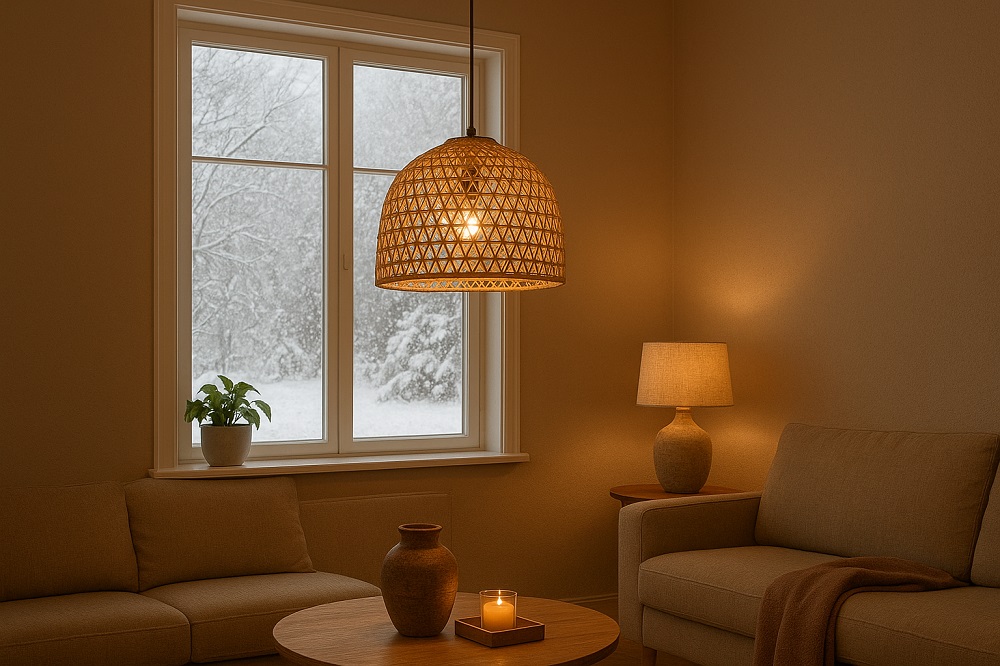
1. Challenges of Outdoor Lighting in Winter
In winter, especially in northern or cold climates, lighting faces more challenges than just lighting. These challenges primarily arise from the following four aspects:
1. Winter temperature fluctuations are dramatic: cold during the day, even colder at night, and often accompanied by freezing temperatures. Thermal expansion and contraction of materials can lead to increased brittleness and loose connections.
2. The impact of humidity and moisture: Melted water from snow, ice, and frost can infiltrate lamps and wiring, creating moisture that can lead to mold, corrosion, and short circuits in electronic components.
3. Atmosphere needs: Winter is dominated by cool colors and short daylight hours, leading people to seek soothing, soft, warm lighting.
4. Reduced energy efficiency: Low temperatures in winter slow charging. For solar-powered lamps, the weak light intensity also reduces charging speeds. Furthermore, battery life and discharge efficiency are inevitably reduced in winter.
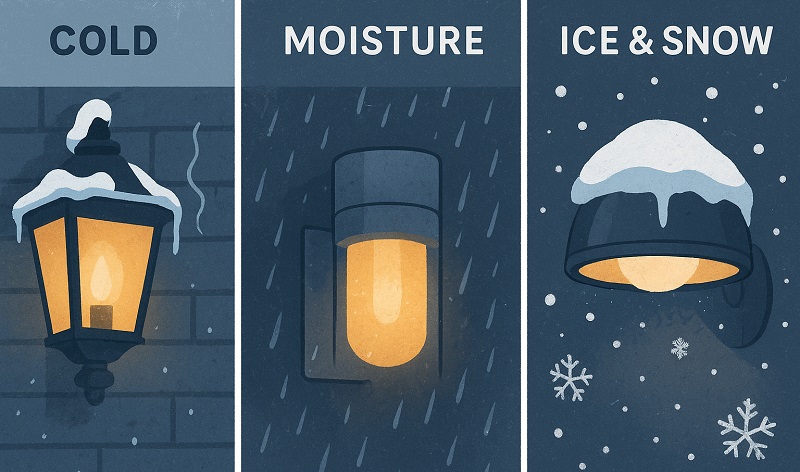
In this context, the material plays a crucial role. Below, based on industry experience, we analyze the advantages and disadvantages of rattan and plastic to help you gain a clearer understanding and make a clearer choice.
2. Advantages and Limitations of Rattan Lights
Rattan lights can be categorized as either natural rattan or imitation rattan. Natural rattan is a naturally grown organic material derived from the climbing vines of the rattan palm plant, while plastic rattan (or synthetic rattan) is a man-made material, typically made of polyethylene (PE) or other high-density polyethylene (HDPE). Although both are called ' rattan ', they exhibit significant differences in their performance in winter.
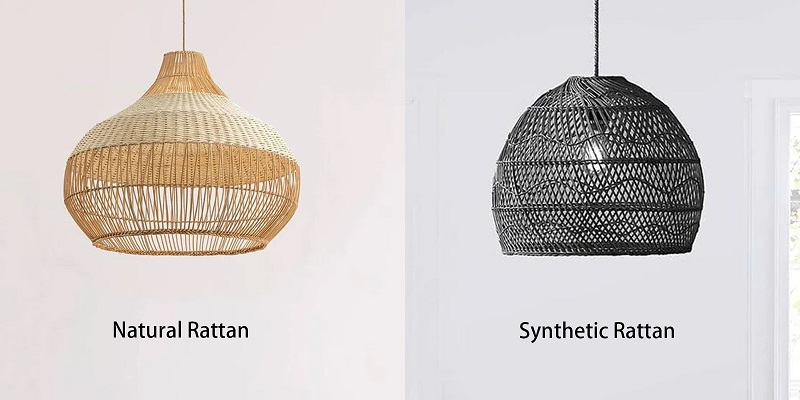
Rattan Lights Offer The Following Four Advantages:
Natural Texture and Warmth
Compared to plastic, rattan possesses a more natural texture and color. Through the warmth of hand-woven materials, various shapes can be created. Light filtering through the gaps in the rattan creates artistic patterns, creating a ' warm and natural ' visual experience in cold winter interiors and satisfying people's desire for a cozy winter atmosphere.
Lightweight and Ventilated Design
Rattan lamps typically feature pores or gaps in their structure, allowing for effective air circulation. This facilitates heat dissipation from the bulb, preventing heat buildup and extending its lifespan. Furthermore, for outdoor use, even if wet, they dry quickly, preventing mold and mildew. Natural rattan is also lighter, making it easier to hang or move.
Sustainability and Environmental Protection
Natural rattan is a renewable material. Proper harvesting and manufacturing do not disrupt the natural cycle, making it more environmentally friendly than plastic. While imitation rattan (typically made of PE plastic) may resemble rattan, it is less weather-resistant and environmentally friendly than natural rattan.
Aesthetics and Lighting Effects
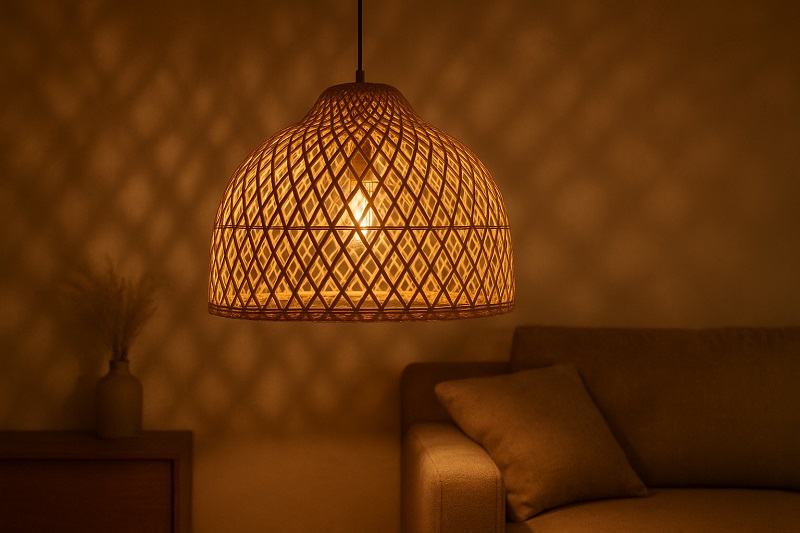
The woven structure of rattan lamps allows light to partially diffuse and penetrate, creating soft shadows and a mottled texture. This creates a sense of depth and comfort in dim winter environments, precisely the lighting effects people seek.
Limitations of Rattan Lights:
Humidity and Frost Damage to Natural Rattan
Rattan is afraid of moisture. Frequent impact of snow, ice, and frost on the lampshade, or water vapor seeping in, can cause natural rattan to absorb moisture, swell, deform, mold, and even rot. Large temperature swings in the air and lingering moisture can easily breed mold. Imitation rattan is better in this regard, but it still requires proper sealing.
Fragility and Mechanical Damage
Although rattan is lightweight, its strength is limited. Low temperatures harden the wood and plant fibers, making them more fragile and prone to breakage from impact or movement. Furthermore, the color of natural rattan will darken or fade over time and with humidity. Imitation rattan may be more weather-resistant, but its texture lacks the richness of natural rattan.
High Maintenance
Natural rattan requires regular drying, cleaning, and moisture-proofing. If using a heater or dryer indoors, be careful to prevent the rattan from drying out and cracking. Outdoor or semi-outdoor use requires protection from rain.
Cost and Lifespan Uncertainty
High-quality rattan lamps require sophisticated craftsmanship and expert weaving, resulting in high costs and a wide range of material variations. If you use inferior rattan lamps, their lifespan may be worse than that of plastic lamps.
3. Advantages and Limitations of Plastic Lights
Plastic lights include both pure plastic lampshades and those with plastic or synthetic materials combined with frames, shades, and housings.
The Advantages of Plastic Lights are Primarily Concentrated in The Following Areas:
Low Price + Ease of Production
Plastic lamps are generally produced using compression molding or injection molding, resulting in relatively low manufacturing costs. Different molds allow for a wide variety of styles, from transparent to frosted, and from color to shape, offering high adjustability. Furthermore, manufacturing consistency is high, surpassing the inconsistencies of handmade products.
Plastics Excel in Waterproofing and Weather Resistance.
Plastics or synthetic materials specifically designed for outdoor use offer excellent waterproofing and UV resistance. They are also scientifically engineered to achieve a strong seal, making them easily resistant to snow, water, and moisture in extreme cold.
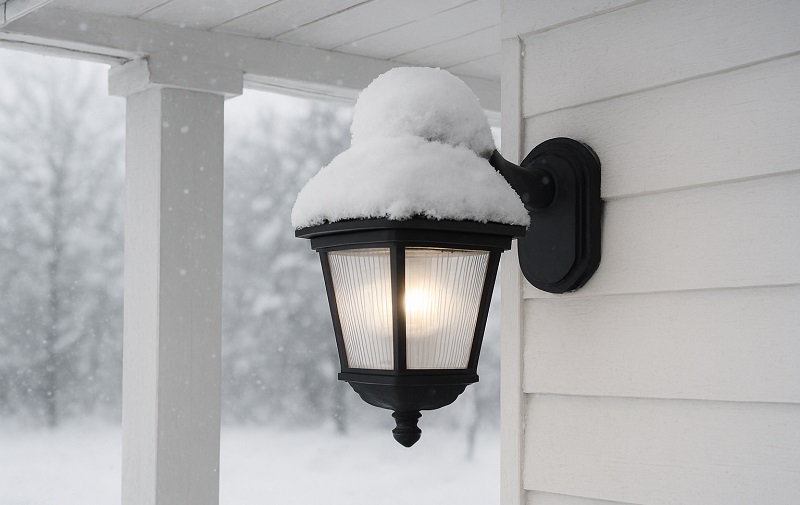
Stronger Impact Resistance and Drop Resistance Compared to Natural Rattan
Unlike rattan, plastics are less likely to crack or break during handling or accidental impacts. While plastic can be affected by snow and ice, causing increased brittleness, the housing of outdoor or semi-outdoor plastic lamps is better able to withstand impacts and maintain its integrity.
Easy Maintenance
Plastic is easier to clean, requiring no frequent drying, insect repellent, or mildew treatment like rattan. Dust and stains can usually be removed with a damp cloth. Repairs and replacements are also easy and inexpensive.
Limitations of Plastic Lights:
Low-Temperature Brittleness and Material Deformation
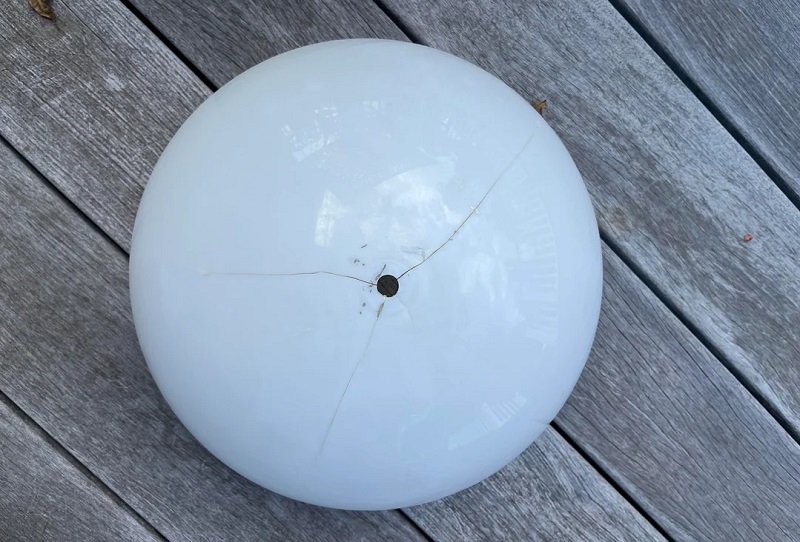
Many plastics become brittle and prone to cracking or breaking at extremely low temperatures, especially when subjected to impact, mechanical tension, or load. A sudden drop in temperature (such as leaving a heated lamp in a very cold place at night) can also cause cracks due to the physical effects of thermal expansion and contraction.
UV and Yellowing Issues
Although winter offers less sunlight, UV rays can still slowly degrade outdoor plastics, causing yellowing on the surface. Certain plastics without UV-resistant treatments have a shortened lifespan.
Unnatural Aesthetics and Texture
Poorly crafted plastics can create a cheap look with their color and texture. Pairing them with wood, fabric, or warm-colored walls can diminish the overall quality and aesthetic appeal. For those who prioritize ambiance and interior coordination, this is undoubtedly a poor choice.
Environmental Impact
The production and disposal of plastics generally has a higher environmental impact than natural materials. If plastics are difficult to recycle or made of unsustainable materials, the waste and environmental impact of long-term replacement cannot be ignored.
Based on the above objective analysis, rattan lamps and plastic lamps each have their own advantages and disadvantages. There is no absolute best. You need to combine your actual needs and make full use of the characteristics of different types of lamps to achieve the best effect.
4. Rattan vs. Plastic: A Comparative Analysis in Winter Scenario
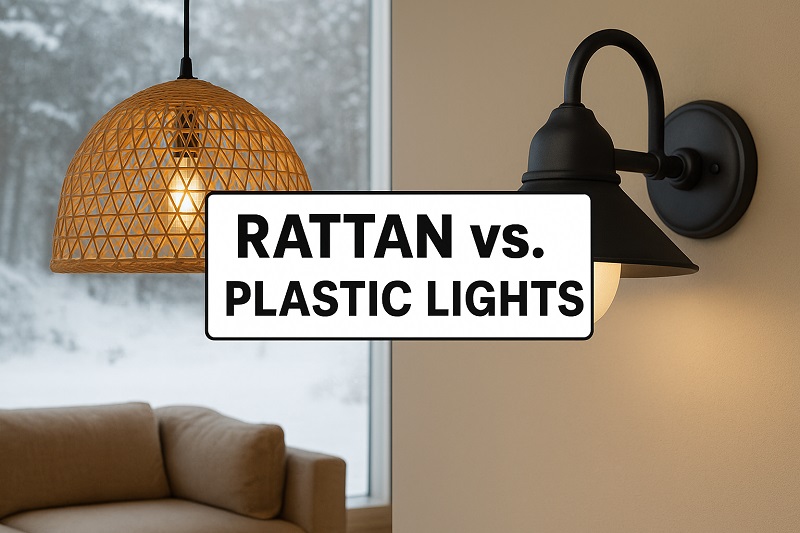
Below is a comparison of rattan lamps and plastic lamps in common winter scenarios (indoor or outdoor, dry or wet, daily use or occasional use) to help you make a practical choice intuitively.
| Scene | Important Factors | Rattan Light (Natural/Imitation) Performance | Plastic Light Performance |
| Indoor, dry environments (living rooms, bedrooms, study rooms, etc.) | Texture, atmosphere, warmth, durability, light and shadow effects | Excellent performance: Natural rattan provides a warm texture and soft shadows; maintenance is relatively simple; brittleness is negligible | Can address budgetary needs; plastic is easy to clean; however, the texture may not be as good as rattan and may appear artificial; yellowing may occur over time |
| Outdoor or semi-outdoor (patio, balcony, porch, under a garden shed) | Waterproof, snowproof, UV-resistant, impact-resistant, and safe | Natural rattan is more risky; direct contact with water, snow, or severe moisture can significantly reduce its lifespan. Well-made imitation rattan may offer some protection against harsh environments. | Plastic lamps are more weather-resistant and frost-resistant if the material is well-selected (UV-resistant, well-sealed, and with a high IP rating). However, be mindful of low-temperature brittleness and joint sealing issues. |
| Occasional on/off lighting or spot lighting (such as decorative or auxiliary lighting) | Prioritizes aesthetics over cost | Rattan lamps offer a highly decorative aesthetic due to their shape and texture. Frequent on/off switching doesn't significantly affect the material itself, but water intrusion should be avoided in humid environments. | Plastic is easy to turn on and off; however, frequent temperature fluctuations, strong sunlight, and cold air may accelerate plastic degradation. |
| Long-lasting lighting/Use of high-wattage bulbs | Heat dissipation, safety, and material resistance | Rattan lamps have good ventilation, which helps dissipate heat. However, natural rattan can easily grow mold and corrode metal fittings if it gets wet. Be cautious when placing heat sources near rattan. | Poor insulation or thermal conductivity in plastic can cause internal heat buildup, leading to deformation, yellowing, and fire hazards. Good plastic and design can mitigate these risks. |
5. My Recommended Material Selection and Maintenance Strategy
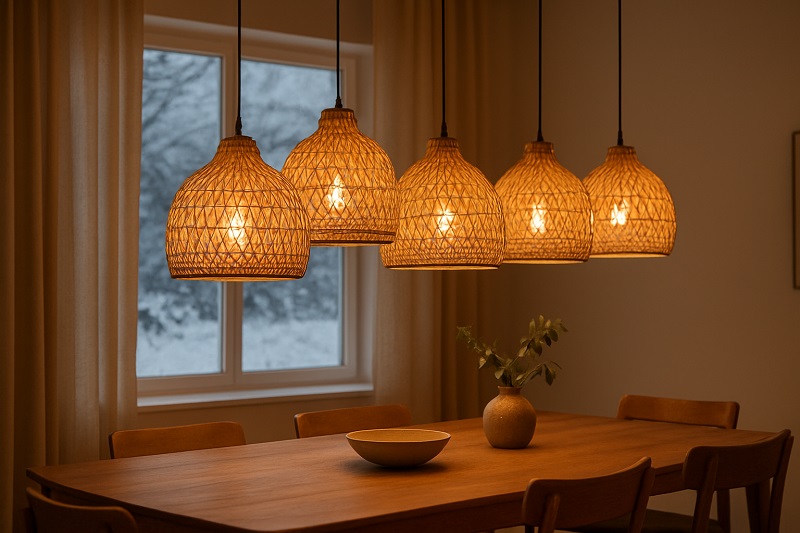
Based on my experience, if I were designing a home, shop, or outdoor space, I'd prioritize a mixed-use strategy: using natural rattan lighting in core indoor areas and outdoor, sheltered areas like patios and gazebos to enhance the spatial quality and create a warm atmosphere.
For outdoor, exposed, and humid locations, use high-quality plastic or synthetic materials (preferably UV-resistant and well-sealed) to ensure long-term stability and easy maintenance, ensuring minimal cost in the event of damage.
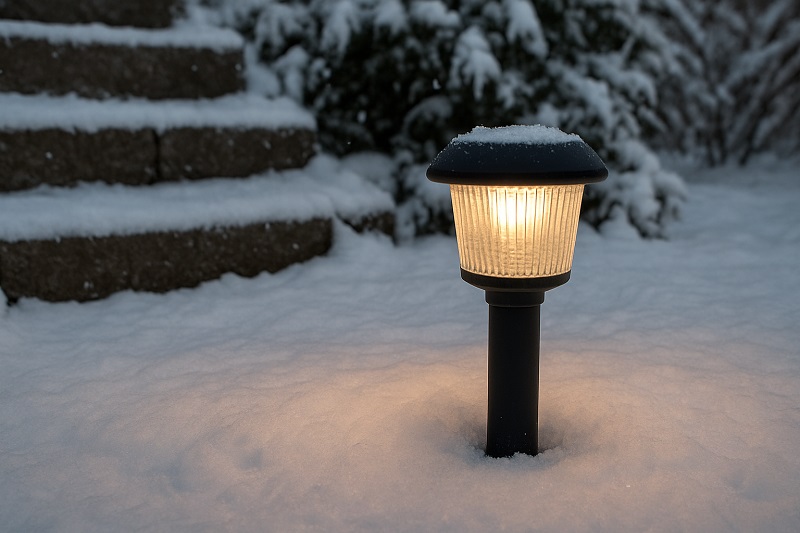
When Purchasing These Lamps, I Rigorously Examine The Following Indicators:
1. For plastic lamps, confirm whether they have UV protection treatment or are labeled ' non-discoloration/anti-yellowing '.
2. Whether they have an IP waterproof rating and whether the sealing of the threads and joints meets the requirements.
3. Whether the material can withstand operation in extremely low temperatures—preferably polycarbonate (PC) or weather-resistant plastics, rather than cheap, brittle plastics.
4. For natural rattan lamps, ensure they are made from high-quality natural rattan. This provides superior toughness, aesthetics, and durability. Avoid inferior rattan lamps. I recommend XINSANXING's rattan lamps. They are treated with anti-corrosion, insect repellent, and anti-oxidation treatments, ensuring quality and reasonable pricing.
5. LED bulbs are the best choice, as they produce less heat, have a longer lifespan, and many models perform better in low-temperature environments. (The US Department of Energy indicates that LEDs and CFLs have been tested to withstand snow and rain, making them suitable for outdoor lighting.)
The Following Are Recommendations for The Maintenance and Use of Outdoor Lights:
1. Regularly inspect the lampshade/lamp body. Whether made of rattan or plastic, repair or replace cracks or gaps immediately to prevent moisture intrusion.
2. Avoid direct exposure to melting snow. If possible, elevating the lamp slightly to prevent snow accumulation is crucial for long-term operation.
3. In winter, when using a heater or stove indoors, pay attention to temperature fluctuations; these changes can affect the lifespan of the material. Natural rattan should be protected from overheating or rapid cooling.
4. Clean gently: For rattan lamps, use a soft brush or dry cloth to remove dust. After wiping with a damp cloth, air dry the lamp quickly to prevent mold. For plastic lamps, avoid using strong alkaline or strong solvent cleaners to avoid damaging the plastic surface and reducing its aesthetic appearance.
5. Choose based on your budget and replacement costs: While plastic lamps have a lower initial investment, poor quality materials and design may require frequent replacement. Rattan lamps, if high-quality and well-maintained, may be more economical in the long run (considering the combined value of aesthetics and durability).
Regular cleaning and maintenance are crucial for any type of outdoor lighting to ensure long-term performance. To reduce the cost and hassle of frequent replacements, ensure that maintenance is up to standard.
6. Summary: Deciding ' Which is Better in Winter? '
If I were to choose lighting for winter, using industry standards to comprehensively consider aesthetics, comfort, and longevity, I would lean towards natural rattan or high-quality imitation rattan lamps for core spaces. The warmth and natural feel they create visually and ambiance are difficult to fully replace with plastic. For outdoor lighting or in areas potentially exposed to snow, ice, or moisture, I would prefer high-quality plastic lamps, but they must be specifically designed for weather resistance.

Simply put, no one material is ' definitely better ' than another. The key lies in where the lamp will be placed, the winter environment, and your preference for aesthetics, durability, and cost. These are my personal insights, and I hope they can help you make the right choice!
FAQs for Consumers:
Natural rattan is not suitable for wet or snowy winters because it absorbs moisture and cracks easily. If you want the look of rattan lights outdoors, choose synthetic rattan with an outdoor-grade coating.
Polycarbonate is the most reliable choice. It remains impact-resistant even in sub-zero temperatures and resists UV damage better than cheaper plastics.
Store them indoors or in a covered area. Avoid direct exposure to snow or heavy rain. Clean with a dry or slightly damp cloth and ensure adequate ventilation to prevent mold and mildew.
Yellowing is not caused by cold weather, but by UV exposure. Choosing UV-resistant plastic can prevent this problem.
Yes. Many homeowners use rattan indoors for a warm atmosphere and plastic outdoors for durability, achieving a balance between aesthetics and practicality.
FAQs for Wholesalers and Importers:
Natural rattan is susceptible to humidity and temperature fluctuations, so we generally recommend synthetic rattan for long-distance shipping. Synthetic rattan is less susceptible to warping and holds up well during shipping. Proper packaging with a moisture barrier also minimizes risk.
We offer CE, RoHS, and sometimes UL certifications, depending on the market. Importers should verify local compliance (e.g., CE in the EU, UL in North America). Both rattan and plastic lights produced with certified components meet these standards.
Plastic lights, particularly UV-resistant polycarbonate, are generally better suited for warehouse storage. Natural rattan requires climate control to prevent mold and mildew. Synthetic rattan offers a balanced choice, combining durability with a natural look.
Yes. Plastic lamps typically support high-volume production and have lower unit costs. Rattan (especially handwoven) typically has higher labor costs and less flexibility in minimum order quantities. Both offer custom colors, shapes, and branding, but lead times vary.
Due to the greater durability of plastic outdoor lamps, importers typically increase orders before winter. Rattan lamps, especially indoor or decorative ones, see peak demand before the holidays. Planning shipping times (3-4 weeks for ocean shipping) is crucial.
Yes, if it uses recyclable PE rattan or FSC-certified wood/bamboo frames. While plastic is generally cheaper, synthetic rattan can be positioned as a sustainable and durable alternative—a value many retailers place on it.
Post time: Sep-25-2025