


Suggested excerpt: A clear outdoor lighting custom packaging brief should control the exact SKU, product dimensions, vulnerable areas, packing hierarchy, labels, handling route, validation method, and approval process. This guide gives project buyers a practical structure to use before mass production.
An effective outdoor lighting custom packaging brief should answer one central question: what must be controlled so that the correct product reaches the correct destination in the agreed condition and can still be identified when it arrives?
Before packaging development begins, the buyer and supplier should record the exact model and revision, measured product dimensions and weight, packed orientation, vulnerable or protruding areas, unit and master-pack quantities, material restrictions, carton limits, label and artwork requirements, distribution route, handling risks, validation method, approval sample, and change-control process.
“Make the packaging stronger” is not a complete brief. It does not identify the product variant, the shipping environment, the acceptance criteria, or who can approve a change. A controlled brief turns a general request into information that purchasing, engineering, packaging, production, quality, logistics, and the destination warehouse can all review.
Why Custom Packaging Must Start with Product Data
Packaging cannot be specified reliably from a product name or catalog photo alone. Two outdoor lights may share a material or design language while differing in height, handle position, center of gravity, surface sensitivity, or exposed components.
Start with a model-level product record. At minimum, capture:
- Exact model, size variant, finish, and drawing or sample revision
- Overall dimensions in the agreed product state
- Dimensions with handles, hooks, or movable parts in the intended packed position
- Measured net weight rather than an estimate based on appearance
- Material and surface-finish information relevant to contact protection
- Protrusions, openings, edges, glass areas, controls, and other risk points
- Permitted product orientation and any side that must remain free of pressure
- Confirmed removable parts and accessories
- Required clearances between the product and protective structure
- Photos or drawings showing the measurement points
If any value is unavailable, mark it to be confirmed and assign an owner and due date. A blank or assumed value can become an expensive error when the pack is scaled to a bulk order.
The 12-Field Outdoor Lighting Custom Packaging Brief
The following table can be used as the core of a packaging request or supplier questionnaire.
| Brief field | What to define | Evidence or approval record |
|---|---|---|
| 1. Product identity | Model, revision, dimensions, finish, and order reference | Approved specification or sample |
| 2. Product condition | Assembled state, handle position, accessories, and protective films | Packed-state photo or drawing |
| 3. Product risk points | Surface, glass, frame, shade, control, protrusion, or moving-part concerns | Marked product images |
| 4. Packing hierarchy | Product-contact protection, unit pack, inner pack, master carton, and transport unit | Packaging drawing and bill of materials |
| 5. Pack quantity | Units per level and permitted model or color mixing | Packing configuration sheet |
| 6. Dimensional limits | Maximum unit-pack and master-carton dimensions and weight | Buyer or carrier requirement |
| 7. Material rules | Required, restricted, recyclable, or market-specific materials | Written compliance requirement |
| 8. Distribution route | Transport modes, transfers, warehouse handling, and final delivery conditions | Route profile |
| 9. Labels and artwork | Brand files, language, barcode, model, quantity, marks, and label position | Approved artwork proof |
| 10. Validation plan | Test method, sequence, sample count, acceptance criteria, and report format | Approved validation protocol |
| 11. Approval gate | Prototype, pre-production sample, photos, report, and approval authority | Signed approval record |
| 12. Change control | What requires reapproval and how revisions are identified | Change notice and revision history |
This table is a starting point, not a universal packaging specification. The final values should come from the product, route, destination-market requirements, contract, and agreed validation plan.
Control Size Variants as Separate Packaging Inputs
One product family can contain variants that look similar but create different packaging requirements.
The catalog lists SXT0555M and SXT0555L as iron and PE-rattan products. Both have a listed diameter of 16 cm, but their listed heights are 40 cm and 80 cm. The taller version should not inherit a packaging design merely because the diameter and appearance are similar.
For each size, confirm the actual weight, center of gravity, handle position, allowable orientation, compression-sensitive areas, and transport configuration. The packaging drawing, validation sample, and approval record should identify the exact size variant.
Do Not Group Different Constructions by Appearance
The catalog also shows why “outdoor light” is too broad a description for packaging planning:
- SXT0546 is listed at 18 × 50 cm with an imitation-stone material description.
- SXT0554 is listed at 14 × 14 × 17 cm with a marble-and-glass material description.
Their shapes, listed materials, and dimensional envelopes are different. That does not by itself prove which packaging solution either product needs, but it does show why the same unverified protection method should not be copied from one to the other.
Define the Packed State Before Measuring
A dimension is useful only when everyone measures the same product state. Before recording length, width, and height, answer these questions:
- Is the light fully assembled or partially assembled?
- Is the handle upright, folded, secured, or removed?
- Are any accessories packed with the unit?
- Are controls, connectors, or protrusions included in the measurement?
- Which faces are the reference planes?
- Is the measurement taken from a production unit, approved sample, or drawing?
Photos with arrows and reference points reduce ambiguity. For curved, woven, or irregular products, record the maximum envelope as well as any critical contact or clearance dimension.
Do not infer weight from material names. Measure the approved product configuration, then confirm whether the packaging limit applies to net weight, gross unit-pack weight, master-carton weight, or all three.
Use Model and Variant Control in the Packaging Drawing
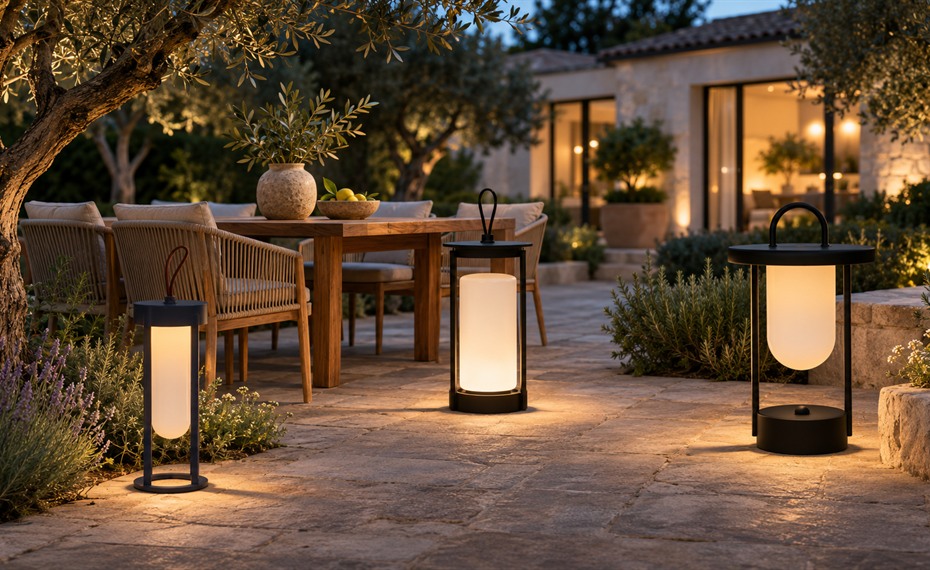
The catalog lists several iron models with related but distinct silhouettes:
- SXT0542: 18 × 41 cm
- SXT0543: 20 × 36 cm
- SXT0544: 20 × 40 cm or 26 × 40 cm
Their height, width, frame arrangement, diffuser shape, and handle geometry are not identical. A packaging document should therefore show the approved model and variant rather than using a generic “lantern” image.
For every controlled drawing, include the packaging revision, product model, product revision where applicable, packed orientation, quantity, key dimensions, material list, label position, and approval status. When a product or pack changes, retain the revision history instead of overwriting the old file without explanation.
Describe the Complete Packaging Hierarchy
A useful brief separates the packaging system into levels. Depending on the project, these may include:
- Product-contact protection
- Unit packaging
- Inner or multi-unit packaging
- Master carton
- Pallet, container, or other transport configuration
The brief should state the purpose and constraints of each level without prematurely prescribing an unverified material or structure. For example, the buyer may need non-marking product contact, separation between units, a master-carton weight ceiling, or a particular barcode position. The supplier can then propose a structure for review and validation.
If the destination market restricts certain materials or requires recycling, disposal, or language information, include the exact source requirement. Do not rely on phrases such as “eco-friendly packaging” without defining the material, evidence, labeling, and market involved.
Build the Distribution Route into the Brief
Packaging performance depends on the route after it leaves the factory. A direct full-container shipment to one warehouse is different from a mixed shipment that passes through several distribution centers and parcel networks.
Map the expected route:
Factory → export handling → international transport → import handling → regional warehouse → local transport → project site or retail customer
For each stage, record the expected transport mode, number of transfers, storage conditions, palletization or floor-loading method, manual handling, stacking, and final delivery constraints. If any stage is unknown, record the planning assumption and verify it before approval.
This route profile helps the parties choose a relevant validation plan. It also makes later changes visible: a packaging design approved for one route may need review if the order moves to a different channel.
Treat Labels and Artwork as Controlled Data
Packaging can protect the product and still fail operationally if the model, quantity, destination, or barcode is wrong.
The artwork brief should specify:
- Approved brand and artwork files
- Exact product and variant name
- Buyer item number and supplier model, where both are required
- Quantity and unit of measure
- Barcode type, data source, size, and verification responsibility
- Country, language, legal, recycling, or handling marks required by the destination market
- Label dimensions, material, location, and orientation
- Date, batch, purchase-order, or traceability fields, if required
- Proofing and final approval process
Use variable-data rules rather than manually editing each label when an order contains multiple models. The approval proof should show real sample data and be linked to the correct packaging revision.
Define Validation Before the Prototype Is Made
Do not wait until a packed sample is ready to discuss testing. The brief should define:
- The route or risk the validation is intended to represent
- The approved test method or project procedure
- Sample quantity and conditioning, where applicable
- The order of test events
- Product, packaging, label, and carton acceptance criteria
- Inspection points before, during, and after testing
- Photo, measurement, and report requirements
- Who reviews the results and who approves the final pack
Avoid copying test numbers from an unrelated product or route. The buyer and supplier should agree on the applicable standard, laboratory or internal method, severity, and pass/fail criteria for the project.
When a failure occurs, record the failure mode, corrective action, new revision, and retest scope. A revised component should not be introduced into mass production under the original approval record without documented review.
Establish a Packaging Approval Gate
Before mass production, the controlled package should include:
- Approved product sample or specification
- Final packaging drawing and material list
- Packed-sample photos from defined angles
- Confirmed unit and master-pack dimensions and gross weights
- Approved artwork and variable-data file
- Validation report
- Packing work instruction
- Inspection checklist
- Approval signatures or recorded digital approvals
- Open-issue list with owners and deadlines
The purchase order should reference the approved revision. Production and quality teams should be able to identify it without relying on an old email attachment.
Manage Cost Without Losing Control
Packaging cost should be reviewed together with damage risk, product value, shipment mode, pack density, handling time, disposal requirements, and rework risk. A lower unit-pack price may not reduce total landed cost if it increases cube, warehouse labor, or transit claims.
Ask the supplier to state the assumptions behind a proposal:
- Order quantity and units per pack
- Tooling or one-time development cost
- Packaging material and labor basis
- Unit-pack and master-carton dimensions
- Net and gross weight
- Estimated pack-out time
- Validation and sample cost
- Artwork or plate charges
- Revision validity and price-break conditions
Compare proposals on the same product, route, pack quantity, and acceptance criteria. Otherwise, two quotations may describe different performance scopes.
Frequently Asked Questions
What should an outdoor lighting custom packaging brief include?
It should identify the exact product and revision, measured dimensions and weight, packed state, risk points, packaging hierarchy, pack quantity, material rules, dimensional limits, route, labels, validation method, approval gate, and change-control process.
Can one packaging design be used for several outdoor-lighting sizes?
Only after the supplier and buyer verify that the proposed structure fits and protects every controlled variant and that each configuration passes the agreed validation. Similar appearance is not enough.
When should packaging development start?
Begin after a stable product configuration and route assumptions are available, but early enough to complete prototypes, artwork, validation, corrective action, and approval before mass-production packing materials are ordered.
Who should approve custom packaging?
The approval team depends on the project, but it commonly includes the buyer’s purchasing or project owner and the supplier’s engineering, quality, production, and logistics representatives. Artwork or compliance specialists may also be required.
Does a catalog dimension replace physical measurement?
No. Catalog dimensions are useful for product identification and early planning. The final pack should use confirmed measurements and weight from the approved production configuration.
Should packaging be reapproved after a product change?
Review any change that can affect fit, protection, orientation, weight, labeling, pack quantity, materials, or validation performance. The change-control record should state whether reapproval or retesting is required.
Prepare the Brief Before Requesting a Final Quote
A controlled packaging brief helps project buyers compare like-for-like proposals and reduces late changes before shipment. It also gives the supplier a clear basis for samples, drawings, validation, inspection, and production instructions.
Start with the exact product family in the outdoor lighting range or review the product catalog. Then send the target models, order quantity, destination markets, distribution route, label requirements, material restrictions, and required approval date through the contact page. For available project support, see the service overview.
Post time: Nov-26-2026