


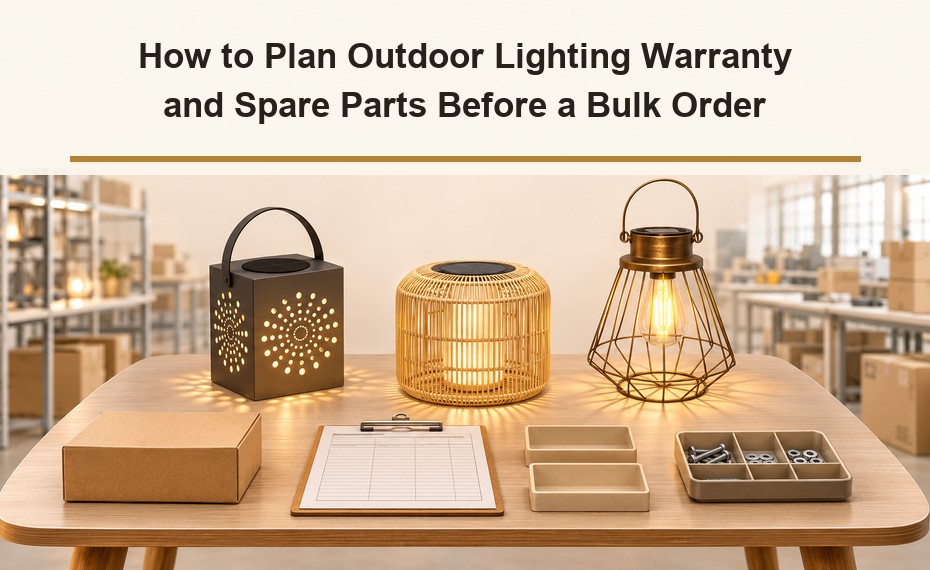
Suggested excerpt: A warranty statement alone does not keep a hotel, retail program, or multi-site outdoor lighting project running. This guide shows buyers how to define warranty scope, claim evidence, spare-part compatibility, stock quantities, and reorder support before placing a bulk order.
Before placing a bulk outdoor lighting order, buyers should agree in writing on ten points: which products and parts are covered, the warranty start date and duration, what counts as a valid defect, exclusions, required claim evidence, the response process, available remedies, responsibility for freight and labor, the spare-parts list, and how long compatible replacements can be reordered.
The buyer should then create a model-level spare-parts matrix showing the exact part description, compatible model and revision, quantity, storage location, and replenishment trigger. This turns outdoor lighting warranty and spare parts from a general promise into an operating plan.
1 Warranty Coverage and Spare-Parts Planning Are Different
A warranty defines how the buyer and supplier will handle qualifying problems. A spare-parts plan defines how the buyer will keep products operating while a claim is reviewed, a replacement is shipped, or normal wear is addressed.
A project may have written warranty coverage but no locally available replacement items. It may also have a box of spare components without any record of which model, finish, or production revision they fit. Both situations can create avoidable downtime.
Professional buyers connect the two plans before approving a purchase order:
- ✔ The warranty states the commercial and technical responsibilities.
- ✔ The spare-parts matrix identifies what can be supplied and where it can be used.
- ✔ The claim process defines the evidence needed for a decision.
- ✔ The replenishment plan keeps service stock available throughout the required support period.
2 Ten Questions to Confirm Before a Bulk Order
| Planning item | What the buyer should confirm | What to record |
|---|---|---|
| Covered products | Exact models, variants, finishes, and order references | Model and revision list |
| Covered items | Whole unit, specific components, accessories, or another defined scope | Coverage matrix |
| Coverage period | Start event, end date, and any different periods by item | Contract dates |
| Valid claim definition | The condition that qualifies for review or remedy | Acceptance criteria |
| Exclusions | Installation errors, misuse, transit damage, environmental exposure, normal wear, or other agreed exclusions | Written exclusion list |
| Claim evidence | Photos, videos, labels, batch information, quantities, installation details, and test results | Claim template |
| Response process | Contact, acknowledgement, technical review, decision, and escalation steps | Responsibility chart |
| Remedy | Repair guidance, parts, replacement, credit, or another contractually agreed response | Remedy rules |
| Cost allocation | Product, parts, freight, duty, labor, site access, and disposal responsibility | Cost matrix |
| Spare-parts support | Compatible parts, initial stock, packaging, storage, and future reorder availability | Spare-parts register |
Do not leave these fields to informal email conversations after delivery. Add the agreed version to the purchase documents or another controlled project record.
Build a Model-Level Spare-Parts Matrix
A spare part is useful only when the service team can identify it and confirm compatibility. For every item offered as a replacement or service component, record:
- Supplier part name and part number
- Compatible product model
- Compatible drawing or production revision
- Material, finish, color, and key dimensions
- Whether installation requires tools or trained personnel
- Unit packing method
- Quantity supplied with the original order
- Reorder MOQ and lead time, if applicable
- Storage conditions and shelf-life information, if applicable
- Status: active, replaced, discontinued, or pending confirmation
Avoid descriptions such as “black top,” “small handle,” or “rattan part.” Those descriptions may match several products but still refer to different dimensions or attachment points.
The supplier should also state when a product is not designed for component-level service. Do not assume that a visible panel, light source, control, top cover, or internal module is replaceable simply because it can be seen in a catalog image.
Separate Universal, Family-Specific, and Model-Specific Items
The easiest way to prevent service errors is to classify each spare item by compatibility.
- Universal item: approved for use across a clearly defined product range.
- Family-specific item: used by several products in one family, but not by every product in the catalog.
- Model-specific item: approved for one model, size, finish, or production revision.
- Installation or packing accessory: hardware, instructions, protective material, or another non-product item supplied for a defined purpose.
- Non-serviceable item: not intended to be replaced separately under the agreed service method.
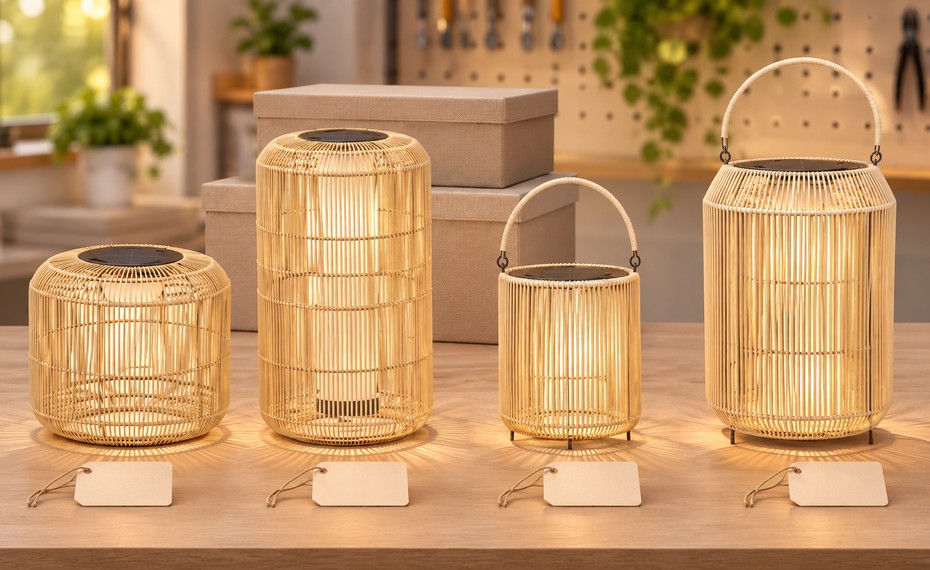
The SXT0234 products shown in the catalog demonstrate why visual similarity is not proof of compatibility. SXT0234-59KS and SXT0234-59KL are both listed in PE rattan, but their catalog sizes are 30 × 28 cm and 30 × 55 cm. The handled SXT0234-37 and SXT0234-38 are listed as 18 × 22 cm and 27 × 44 cm.
They may look like related products, but the buyer should still confirm whether any top assembly, handle, fastener, light component, packing insert, or other service item is shared. Compatibility should come from controlled drawings or supplier confirmation, not appearance.
Plan Spare Quantities from Service Risk, Not a Fixed Percentage
There is no single spare-parts percentage that is correct for every order.
Estimate each input using documented information:
- Installed quantity by model
- Supplier historical service data
- Buyer’s field-return data
- Service lead time / shipping
- Number of installation sites
- Operational impact of downtime
- Universal vs model-specific
- Minimum reorder quantity
- Discontinuation risk
Match the Warranty Review to the Product’s Materials
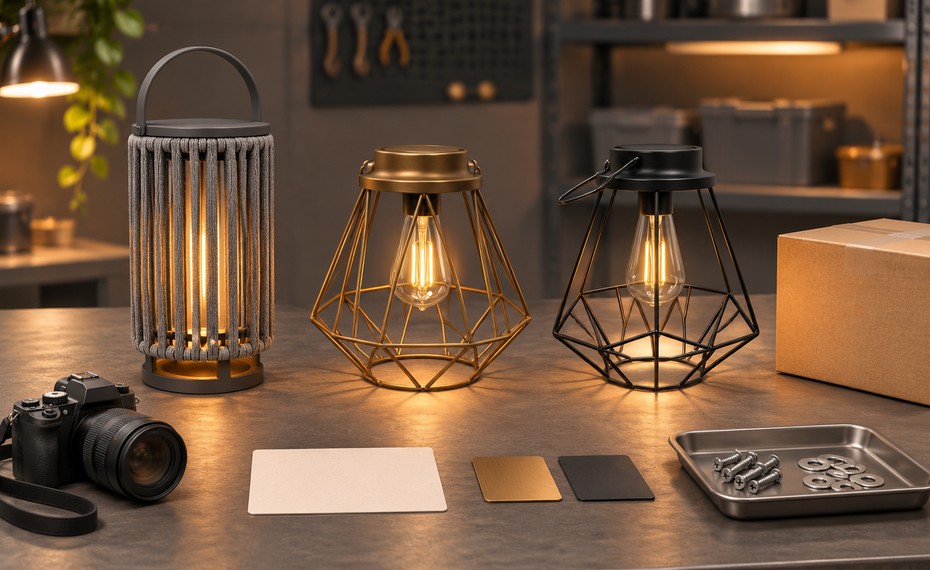
Claims should be coded by the observed issue and the product configuration. Catalog facts help identify the product, but they do not establish replaceability:
- SXT0357: 16 × 20 cm, aluminium.
- SXT0313AM: 22 × 38 cm, aluminium and PE rattan.
- SXT0310B: 31 × 64 cm, iron and PE rattan.
- SXT0324: 27 × 60 cm, iron, aluminium, and PE rattan.
Create a Standard Warranty Claim Evidence Pack
For each claim, collect:
- Purchase order reference
- Product model and revision
- Batch information / labels
- Affected quantities
- Photos (Overview & Close-up)
- Functionality videos
- Installation date & location
- Environmental conditions
- Maintenance history
- Troubleshooting completed
Define Responsibility for Different Issue Types
| Issue category | Questions to review | Possible evidence |
|---|---|---|
| Manufacturing | Does it differ from spec? | Samples, records |
| Transit damage | Was carton damaged? | Unpacking photos |
| Installation | Correct instructions used? | Installer report |
Agree on the Remedy and Cost Allocation
Confirm the available remedy for each covered situation (Guidance, Parts, Replacement, Credit). Also state who is responsible for Freight, Duty, Labor, Site access, and Disposal. Do not assume product coverage includes service costs.
Package and Label Spare Parts
Each package should include: Part name/number, Compatible model/revision, Finish, Quantity, Date, and Storage instructions. Keep model-specific items physically separated.
Plan Reorder and Discontinuation Support
Ask: How long is the model active? Is there a last-buy option? How is compatibility verified if a part changes? Record answers by model.
Frequently Asked Questions
What should an outdoor lighting warranty checklist include?
It should identify the covered models, items, period, defect definition, exclusions, evidence, process, remedies, costs, and spare-parts support.
Are spare parts automatically included with a bulk lighting order?
Not necessarily. The buyer should request a model-specific spare-parts proposal and confirm details before placing the order.
Can visually similar lighting models use the same spare parts?
Do not assume so. Confirm compatibility by model and revision using controlled supplier information.
Plan Support Before You Place the Order
A clear outdoor lighting warranty and spare-parts plan protects more than the original purchase. It helps control service costs and ensures long-term operational success.
Warranty scope, remedies, and reorder support must be confirmed for the specific product and purchase agreement.
Post time: Nov-23-2026